
Taiwan Tech hosts 2026 National Hydrogen and Fuel Cell Symposium, bringing academia and industry together to shape Taiwan’s hydrogen future.
As Taiwan moves towards its 2050 net-zero emissions target, the applications of hydrogen energy in power generation and industrial decarbonisation have attracted increasing attention. In recent years, the government has continued to allocate funding to advance hydrogen energy technologies, energy storage, and the development of supply chains for hydrogen and ammonia.
The 2026 National Conference on Hydrogen Energy and Fuel Cells and the 2026 Annual Meeting of the Taiwan Association for Hydrogen Energy and Fuel Cells, organised by the Taiwan Association for Hydrogen Energy and Fuel Cells and hosted by the Department of Materials Science and Engineering (hereinafter referred to as the Department of Materials Science and Engineering) at Taiwan Tech, was held at Taiwan Tech's International Building from 2 to 3 October. This year's conference was accompanied by a Hydrogen Energy and Fuel Cell Technology Forum, attracting more than 200 representatives from industry, academia, and research institutions. Participants discussed policies, manufacturing processes, certification, and practical applications, exchanged research findings and industry experience, and jointly explored future development directions for Taiwan's hydrogen energy industry.
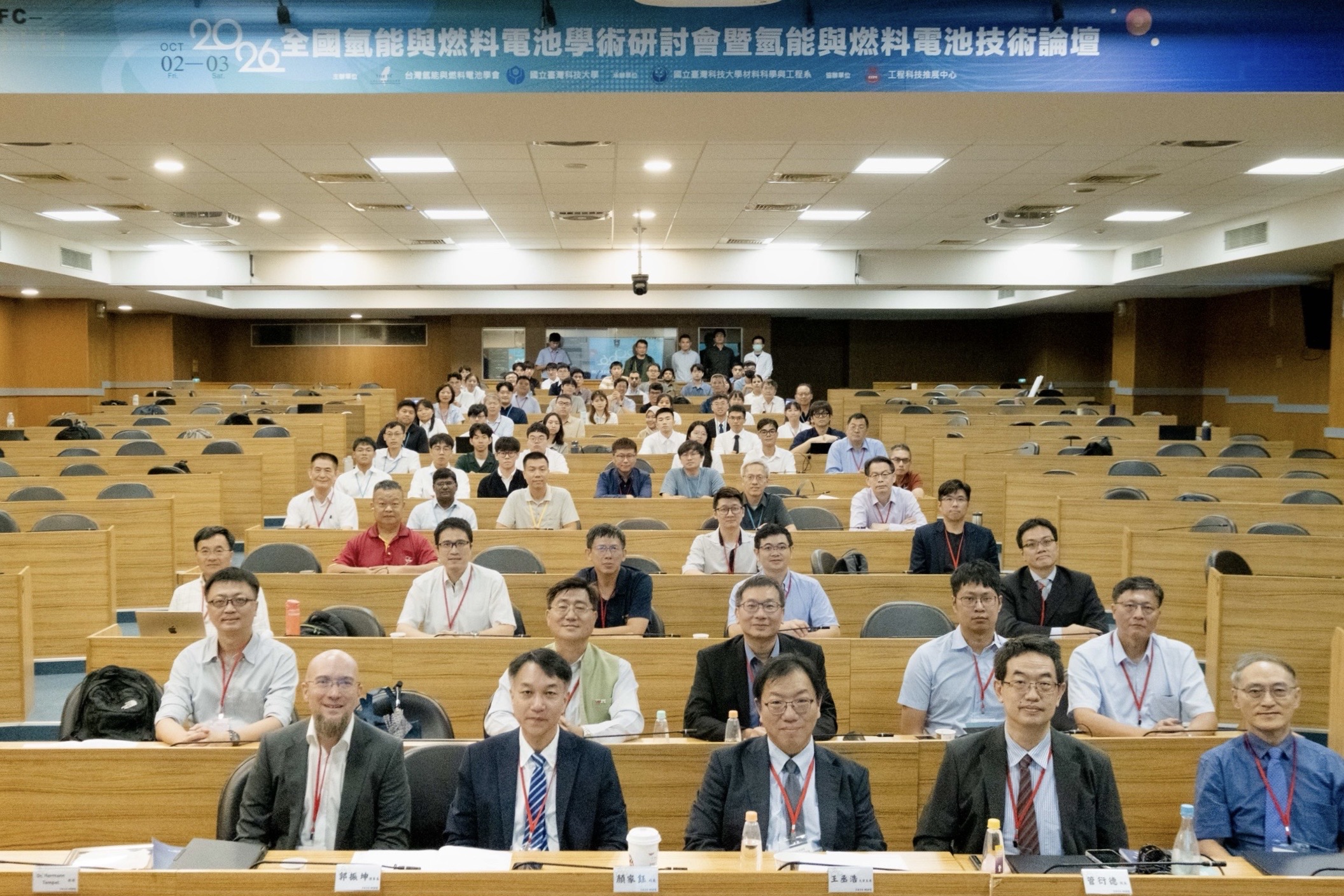
Conference participants pose for a group photo at Taiwan Tech's International Building. Over the two-day event, keynote speeches, technical forums, and paper presentations provided opportunities to exchange hydrogen energy research findings and industry experience.
In his opening address, Taiwan Tech President Jia-Yush Yen expressed his sincere gratitude to Jenn-Kun Kuo, Chairman of the Taiwan Association for Hydrogen Energy and Fuel Cells, for his leadership and to the association for its support. He also thanked Chair of the department Professor Cheng-Hao Wang and his team for their dedicated efforts in organizing the event, which brought industry, academic, and research partners from across Taiwan together at Taiwan Tech. The university has long been committed to research into green energy materials and engineering applications and greatly values this opportunity to host the conference. President Yen expressed his hope that the two-day programme of keynote speeches, technical forums, and paper presentations would foster exchanges and collaboration, "turning research achievements into tangible contributions to the nation".
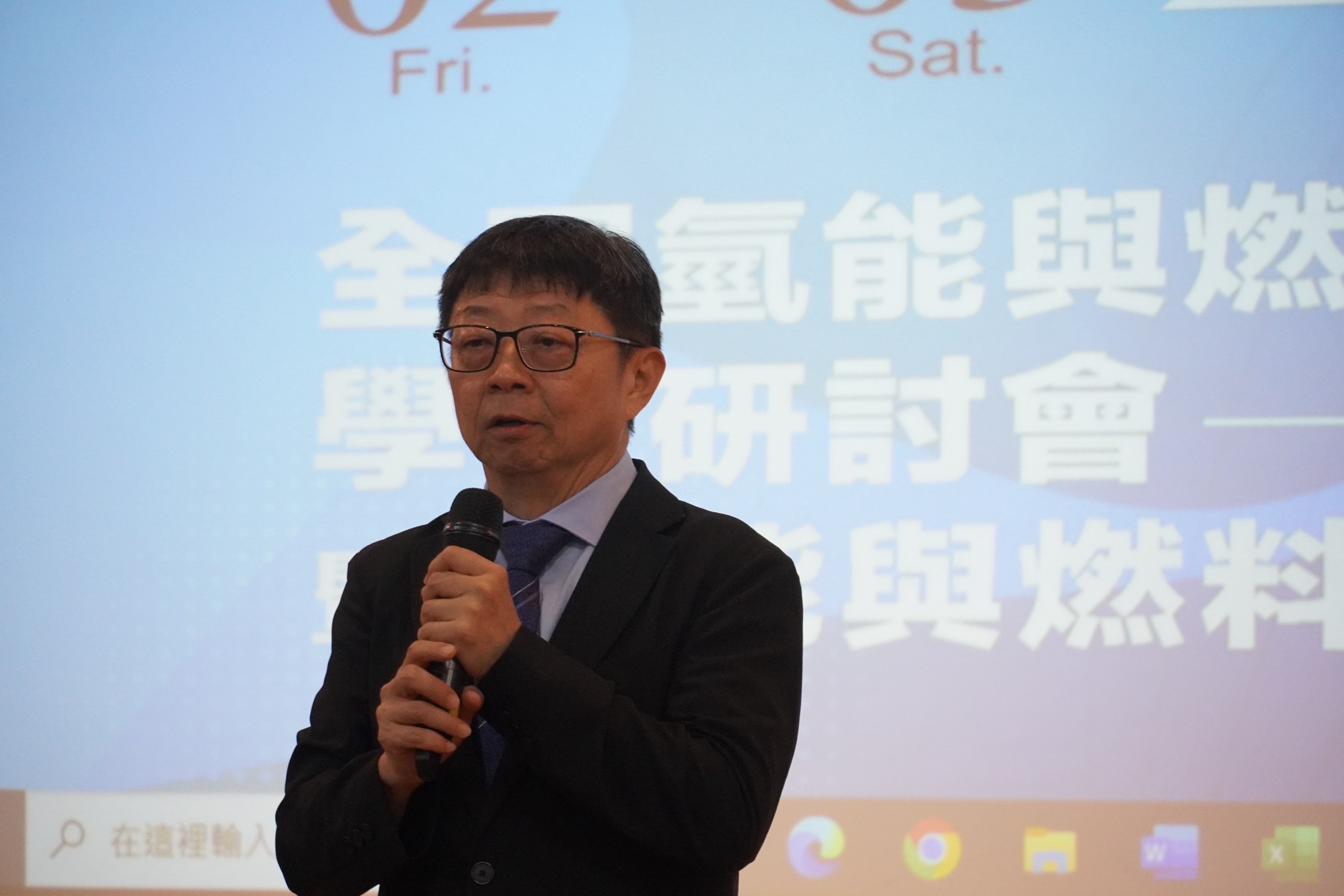
Taiwan Tech President Jia-Yush Yen expressed his hope that the conference would promote industry–academia exchanges and collaboration, enabling research achievements to be translated into tangible contributions to the nation.
On the first day, the Hydrogen Energy and Fuel Cell Technology Forum was led by industry representatives and brought together 11 experts from organisations including the Taiwan Institute of Economic Research, Industrial Technology Research Institute (ITRI), Delta Electronics, Metal Industries Research and Development Centre, Porrima, TÜV Rheinland Taiwan, Linde LienHwa, CPC Corporation's Green Energy Research Institute, and Asia Hydrogen Energy Corp.. The discussions began with domestic and international hydrogen energy policies and the global low-carbon hydrogen market, covering a wide range of topics, including hydrogen production from ammonia, blue hydrogen production processes, international certification for green and low-carbon hydrogen, and hydrogen refuelling station deployment. The forum also focused on end-use applications, such as solid oxide fuel cells (SOFCs) for on-site power generation at AI data centres, hydrogen-powered vessels, and fuel cell trucks, presenting comprehensive solutions spanning the entire value chain, from supply chains to end-use applications.
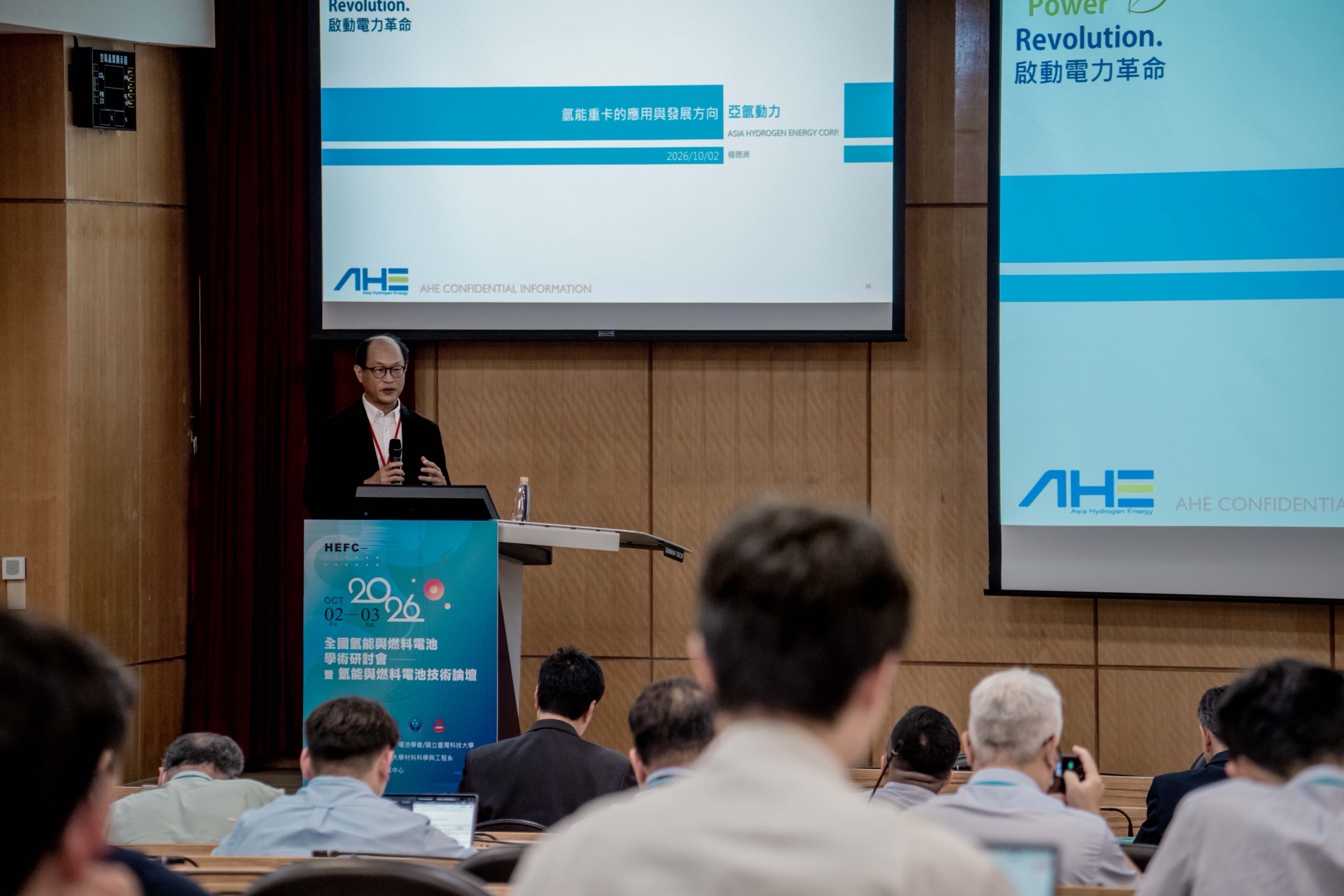
The Hydrogen Energy and Fuel Cell Technology Forum invited industry experts to share their practical experience.
Taiwan Tech Secretary-General Yu-Lin Kuo extended a warm welcome to experts and scholars in the fields of hydrogen energy and fuel cells. He noted that although the Taiwan Tech campus is relatively small, the university actively conducts research across a wide range of disciplines, and he encouraged participants to take this opportunity to exchange ideas and experiences. He also shared his own research experience in solid oxide fuel cells, noting that he understood the importance of rigorous research and technical expertise at every stage, from materials development and individual fuel cells to fuel cell stacks and system integration. He further pointed out that Taiwan Tech has accumulated substantial research experience in areas such as catalytic materials, electrolyser technologies, and energy storage systems. He expressed his hope that the forum would create more opportunities for collaboration and exchanges between enterprises and the university's research teams.
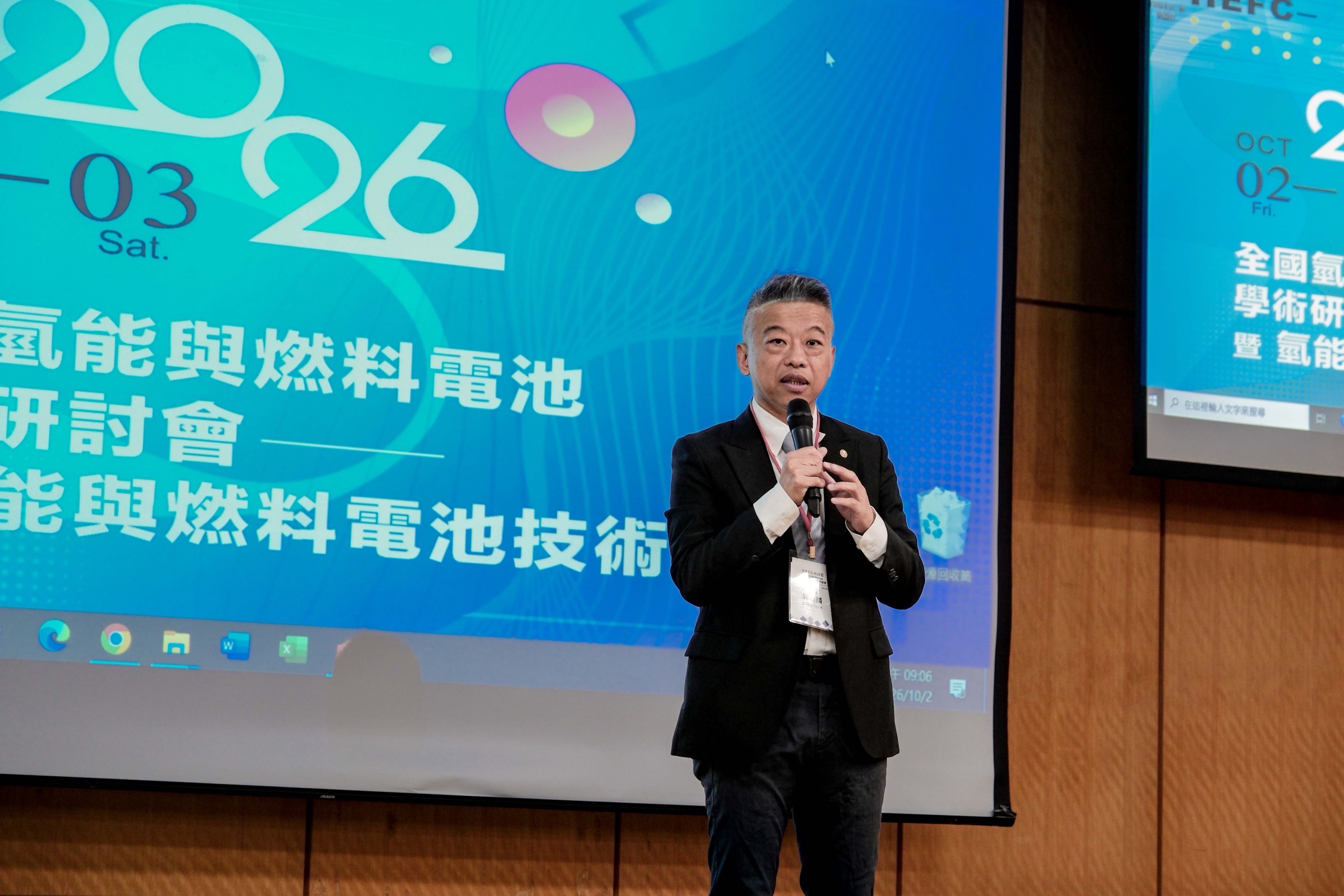
Taiwan Tech Secretary-General Yu-Lin Kuo shared his research experience in solid oxide fuel cells and expressed his hope that the forum would create more opportunities for collaboration between enterprises and university research teams.
The plenary session on the morning of the second day featured keynote presentations by Distinguished Professor Jyh-Ming Ting of National Cheng Kung University, Dr Hermann Tempel of Forschungszentrum Jülich in Germany, and Distinguished Lifetime Professor Yean-Der Kuan, Dean of the College of Engineering at National Chin-Yi University of Technology. Their presentations addressed three major areas: anion exchange membrane water electrolysis (AEMWE) technology, the opportunities and challenges of water electrolysis in the energy transition, and the integration of fuel cell systems with artificial intelligence (AI). Among the presentations, Dr Tempel highlighted a practical example from Germany in 2025, when an oversupply of renewable energy resulted in more than 1,000 hours of negative electricity prices, while the number of hours with high electricity prices simultaneously exceeded 3,000. This example underscored the critical challenges of dynamic electrolyser operation and durability. His insights resonated with Taiwan's domestic needs in addressing the intermittency of renewable energy and promoting flexible hydrogen production through electrolysis, generating enthusiastic responses from the audience. The conference received more than 150 research papers, demonstrating the diverse and vibrant research activities in hydrogen energy across Taiwan.
Conference Chair and Chair of the Department of Materials Science and Engineering at Taiwan Tech, Professor Cheng-Hao Wang, emphasised that hydrogen energy is an indispensable strategic component of Taiwan's transition towards net-zero emissions. He noted that the conference programme was designed to facilitate close dialogue between industry and academia over the two-day event. International scholars presented fundamental research in the morning, while industry representatives shared practical applications and implementation experiences in the afternoon. Taiwan Tech has long been engaged in research into catalytic materials, electrolyser technologies, and energy storage systems. Wang remarked that welcoming hydrogen energy partners from across Taiwan to the university's own campus was not only an honour but also a valuable learning opportunity.
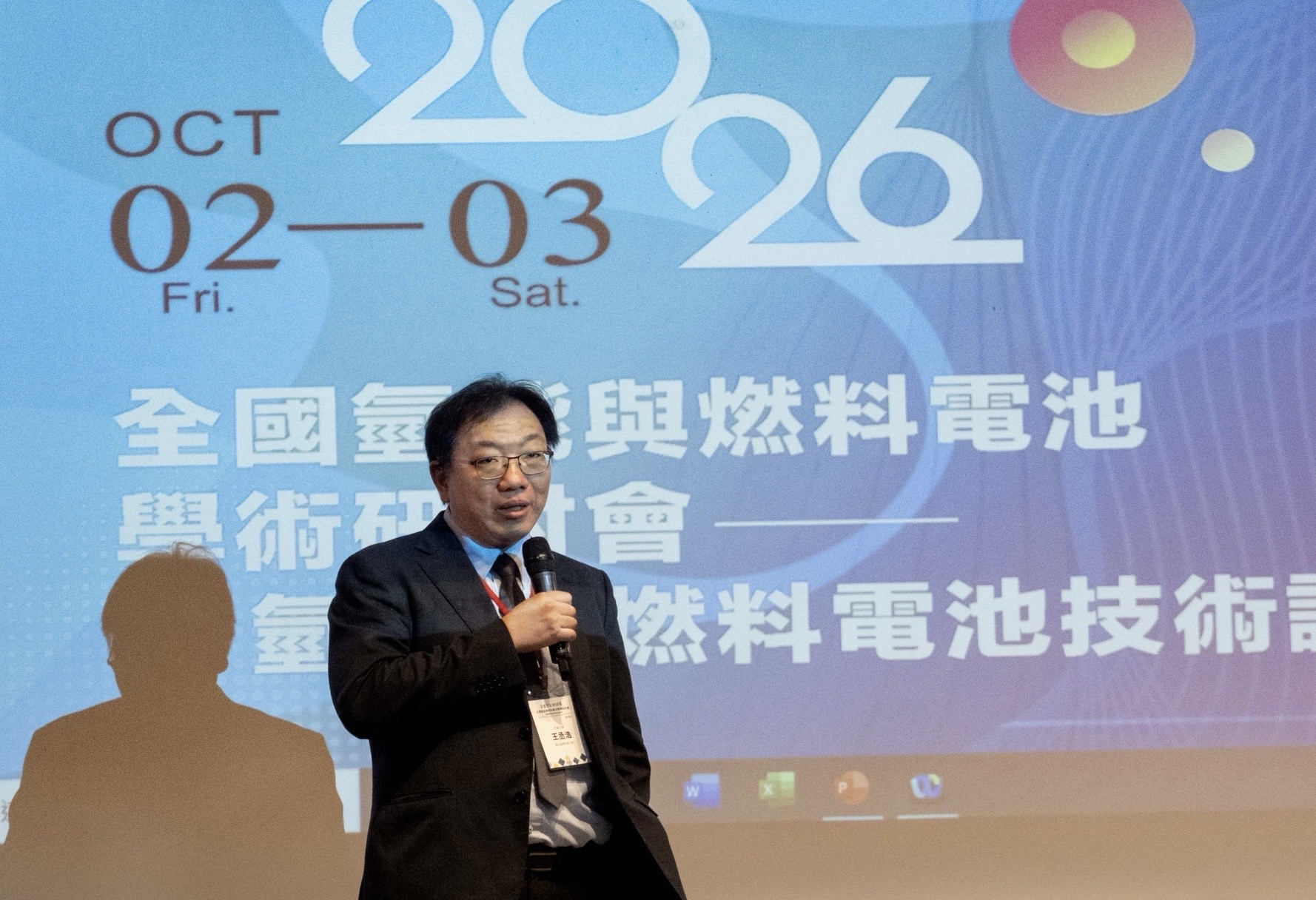
Conference Chair and Chair of Taiwan Tech's Department of Materials Science and Engineering, Professor Cheng-Hao Wang, noted that the programme balanced fundamental research with practical applications, enabling industry and academia to exchange knowledge and experience.
The conference was organised by the Taiwan Association for Hydrogen Energy and Fuel Cells and hosted by Taiwan Tech's Department of Materials Science and Engineering, under the guidance of the Ministry of Education and the National Science and Technology Council (NSTC). It was co-organised and sponsored by several organisations, including the Center for the Promotion of Engineering Science and Technology of the NSTC, the National Atomic Energy Research Institute, the Industrial Technology Research Institute, the Comprehensive Research Institute of Taiwan Power Company, CPC Corporation's Green Energy Research Institute, and Taiwan Tech's Sustainable Electrochemical Energy Development Center. In the future, Taiwan Tech will continue to connect the resources and expertise of industry, academia, and research institutions through the organisation of academic events and the practical implementation of technologies. The university aims to provide practical experience and models that can serve as valuable references and be widely adopted, thereby contributing to Taiwan's 2050 net-zero transition and the development of its hydrogen energy industry.
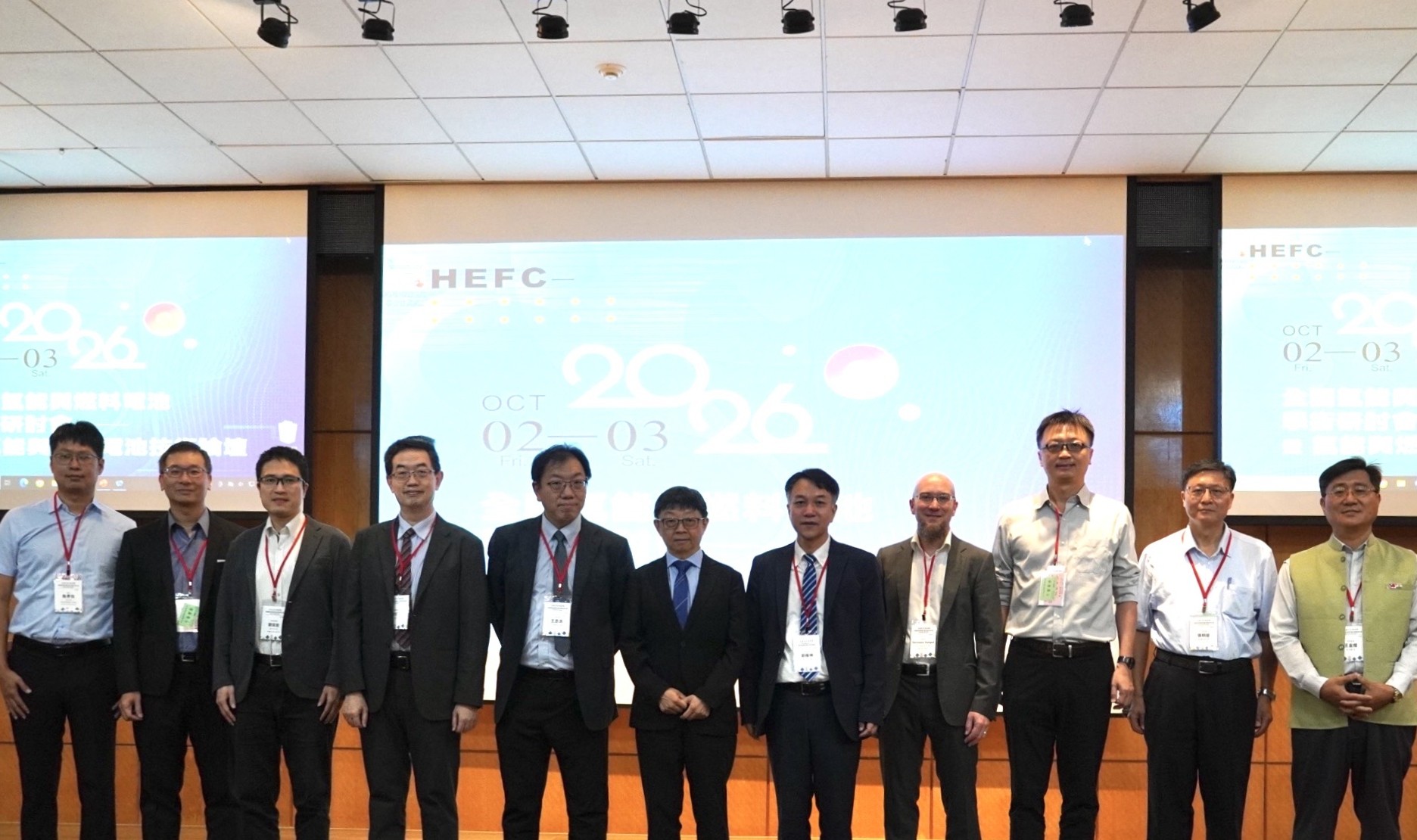
The 2026 National Hydrogen Energy and Fuel Cell Academic Symposium was held at the Taiwan Tech. Participants took a group photo and discussed the development direction of Taiwan's hydrogen energy industry.