
Taiwan Tech advances net-zero technology with award-winning innovations in solid-state batteries, gas separation membranes and battery recycling.
Research teams at Taiwan Tech continue to advance research and development in net-zero and sustainability technologies. At the 2026 Net Zero Tech International Competition, a team led by Distinguished Professor Bing-Joe Huang and Assistant Professor Chen-Jui Huang from the Department of Chemical Engineering won second place in the Energy Category with their project, "Sprout Solid-State Power Research for Ultra-safe Technology". Meanwhile, Tai-Shung Chung, Honorary Chair Professor at the Graduate Institute of Applied Science and Technology, won second place in the Sustainability Category with his project, "Enhanced Earth Sustainability by CO2 Capture from Flue Gas & Hydrogen Production". Each team received a prize of NT$600,000.
The team led by Bing-Joe Huang and Chen-Jui Huang focuses on two major challenges facing next-generation batteries: high energy density and high safety. To address these challenges, the team has developed all-solid-state lithium-ion batteries. The researchers have introduced a dry electrode manufacturing process that eliminates several conventional production steps, including slurry mixing, coating, drying, and solvent recovery. Instead, the materials are directly mixed and then compressed into shape through a rolling process. This approach reduces the use of organic solvents while lowering energy consumption and manufacturing costs. The team has also adopted silicon thin-film anode technology. By taking advantage of the fact that all-solid-state batteries do not rely on liquid electrolytes, the technology addresses cracking and poor electrical contact caused by the repeated expansion and contraction of silicon materials during charging and discharging, thereby improving the stability of high-capacity materials.
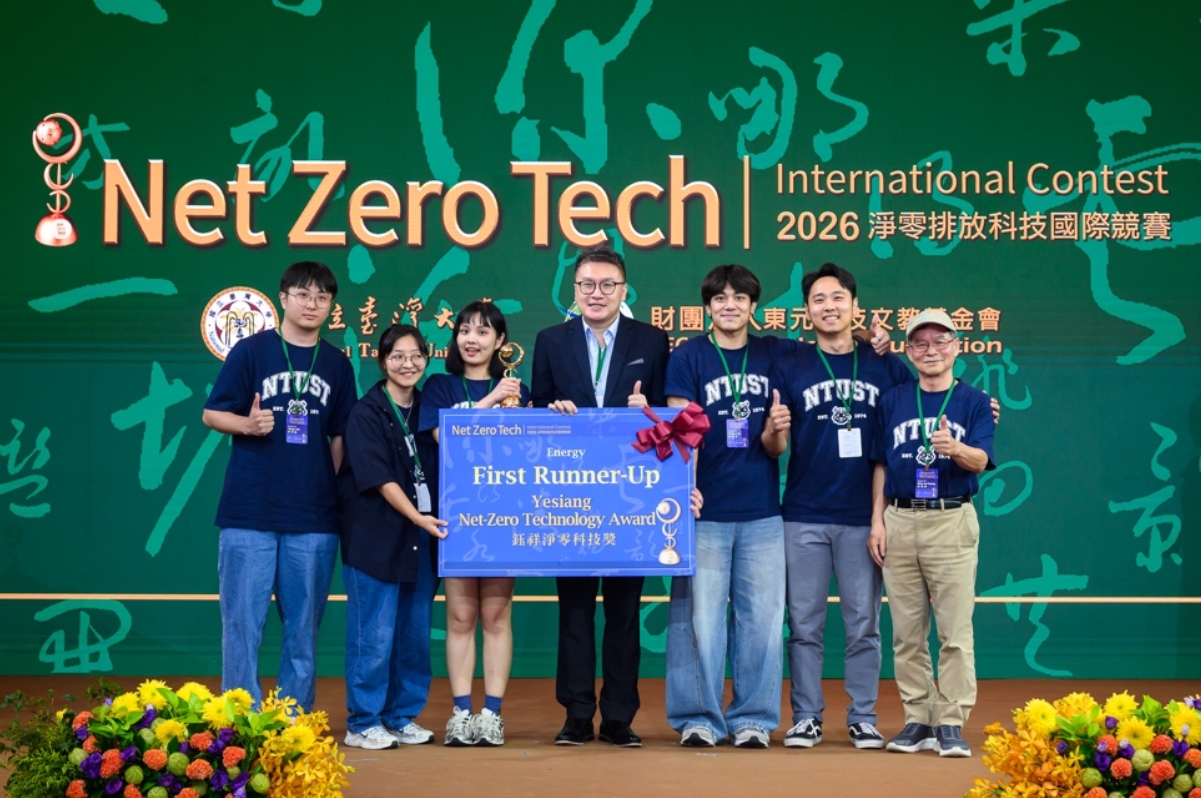
The research team led by Distinguished Professor Bing-Joe Huang (first from the right) and Assistant Professor Chen-Jui Huang (second from the right) from the Department of Chemical Engineering won second place in the Energy Category at the 2026 Net Zero Tech International Competition.
In terms of safety, the team conducted puncture and cutting tests on fully charged all-solid-state batteries at 100% capacity, while monitoring their performance using an industry-grade accelerating rate calorimeter and an infrared thermal imaging camera. The results showed a clear contrast with conventional liquid-electrolyte lithium batteries, which experience rapid temperature increases after being punctured and may even emit smoke or catch fire. All-solid-state batteries, by comparison, exhibited virtually no significant temperature rise. Even when an operating all-solid-state pouch cell was cut open, the connected LED bulb continued to illuminate, and the battery showed no obvious abnormalities. These practical tests, demonstrating that the batteries could withstand both puncturing and cutting, confirmed that all-solid-state batteries can fundamentally and substantially reduce the risks of fire and thermal runaway caused by mechanical damage. Their exceptionally high safety and stability make them promising for applications in industries with stringent safety requirements, including wearable devices, drones, medical equipment, national defence, and industrial backup power supplies.
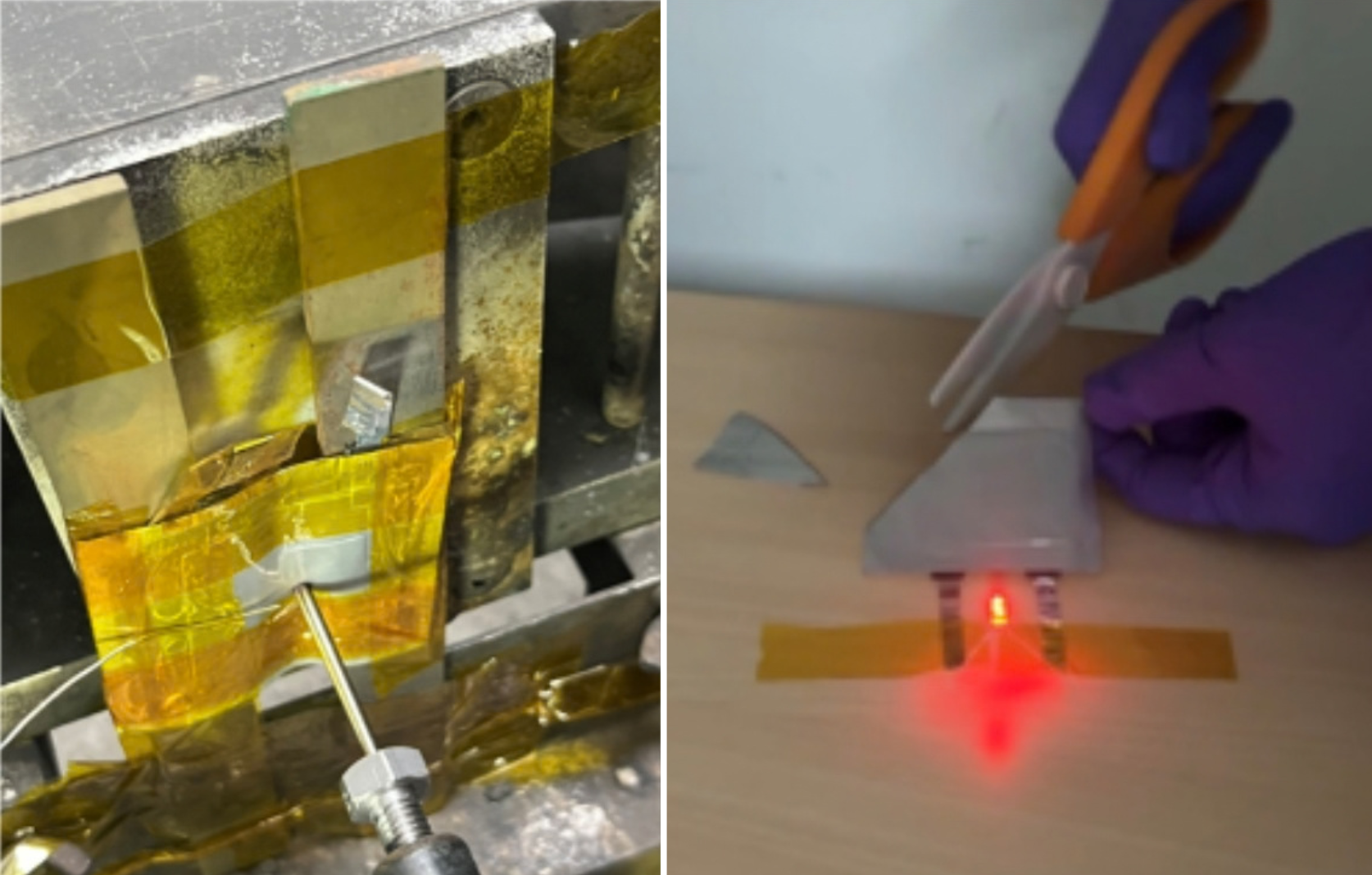
The research team conducted puncture and cutting tests on fully charged all-solid-state batteries at 100% capacity, demonstrating that these batteries can substantially reduce the risks of fire and thermal runaway caused by mechanical damage and offer exceptionally high safety and stability.
The team led by Professor Tai-Shung Chung focuses on carbon dioxide capture and hydrogen purification through the development of high-performance gas separation membranes. By exploiting the different properties of gas molecules, these membranes allow target gases to pass through while blocking others, thereby improving separation efficiency. For carbon dioxide capture, the team incorporated 1 wt% sulfocalix[6]arene into Pebax membranes, achieving a 45% increase in CO2 permeability. By modifying the membranes with amine-terminated polydimethylsiloxane, the CO2 permeability could be increased from 12.01 Barrer to as high as 260.51 Barrer without substantially compromising CO2/N2 selectivity. For H2/CO2 separation, the team incorporated the supramolecular cavity material SBECD into heat-resistant PBI membranes, increasing hydrogen permeability from approximately 4.84 to 13.56 Barrer and H2/CO2 selectivity from approximately 9.15 to 20.23. Furthermore, by modifying Matrimid membranes through vapour-phase crosslinking, the team increased H2/CO2 selectivity substantially from approximately 2.83 to 69.99. The membranes also maintained stable separation performance during 300 hours of mixed-gas testing under alternating dry and humid conditions.
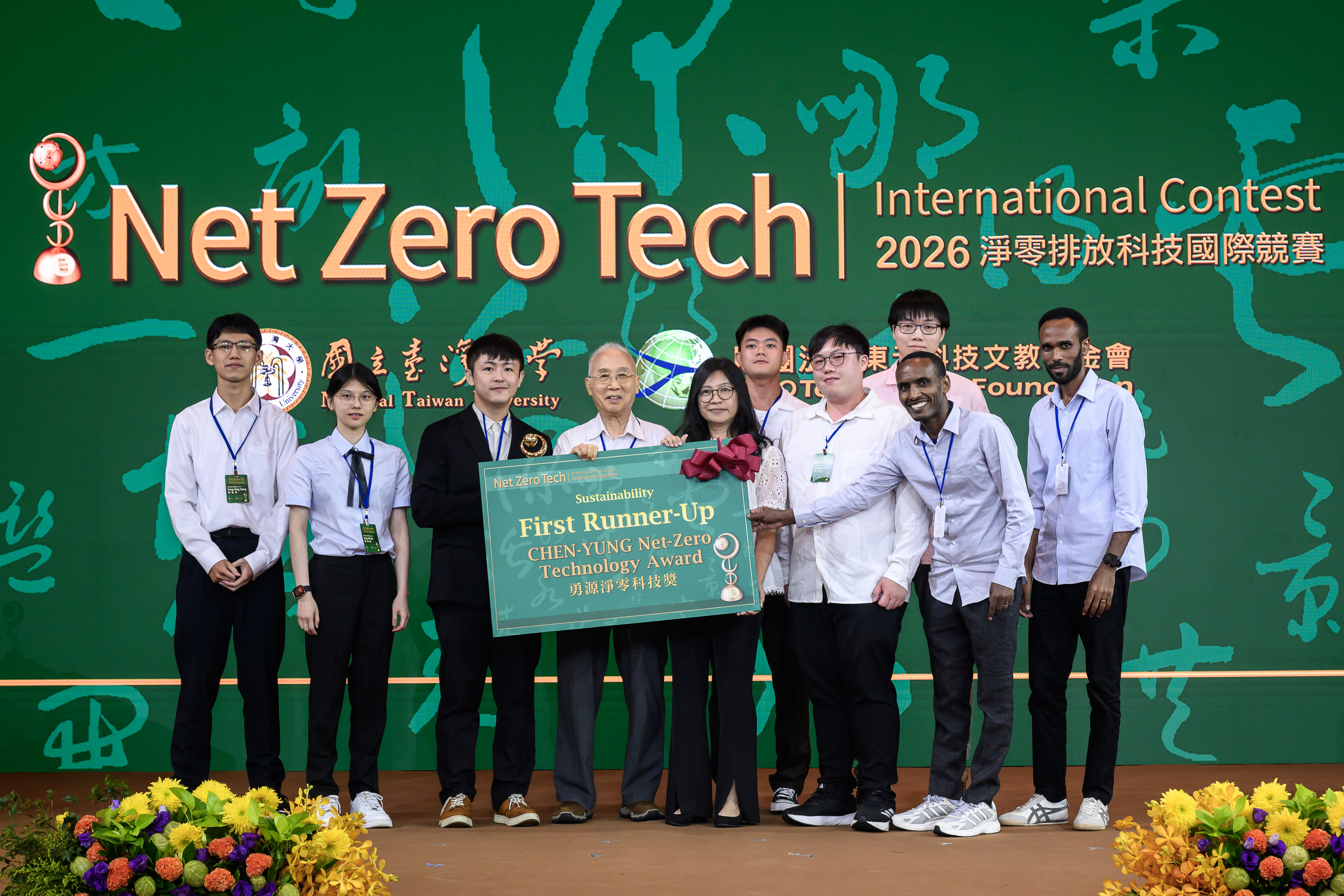
The team led by Honorary Chair Professor Tai-Shung Chung (fourth from the left) of the Graduate Institute of Applied Science and Technology focuses on carbon dioxide capture and hydrogen purification through the development of high-performance gas separation membranes, winning second place in the Sustainability Category.
Beyond developing innovative high-performance membrane materials, the team has further transformed these materials into hollow-fibre membranes with potential for industrial-scale production. The researchers have established corresponding membrane fabrication and modification processes, addressing various aspects, including fibre formation, membrane-layer structures, mechanical strength, multilayer coating, interfacial compatibility, and long-term operational stability. These efforts are gradually transforming high-performance materials into membrane components with practical application potential. From materials research and membrane fabrication to long-term performance testing, the team has progressively established a complete technological chain. The resulting technologies can be applied to carbon dioxide capture, hydrogen purification, and other gas separation processes, providing new technological solutions for reducing industrial carbon emissions and advancing clean energy development.
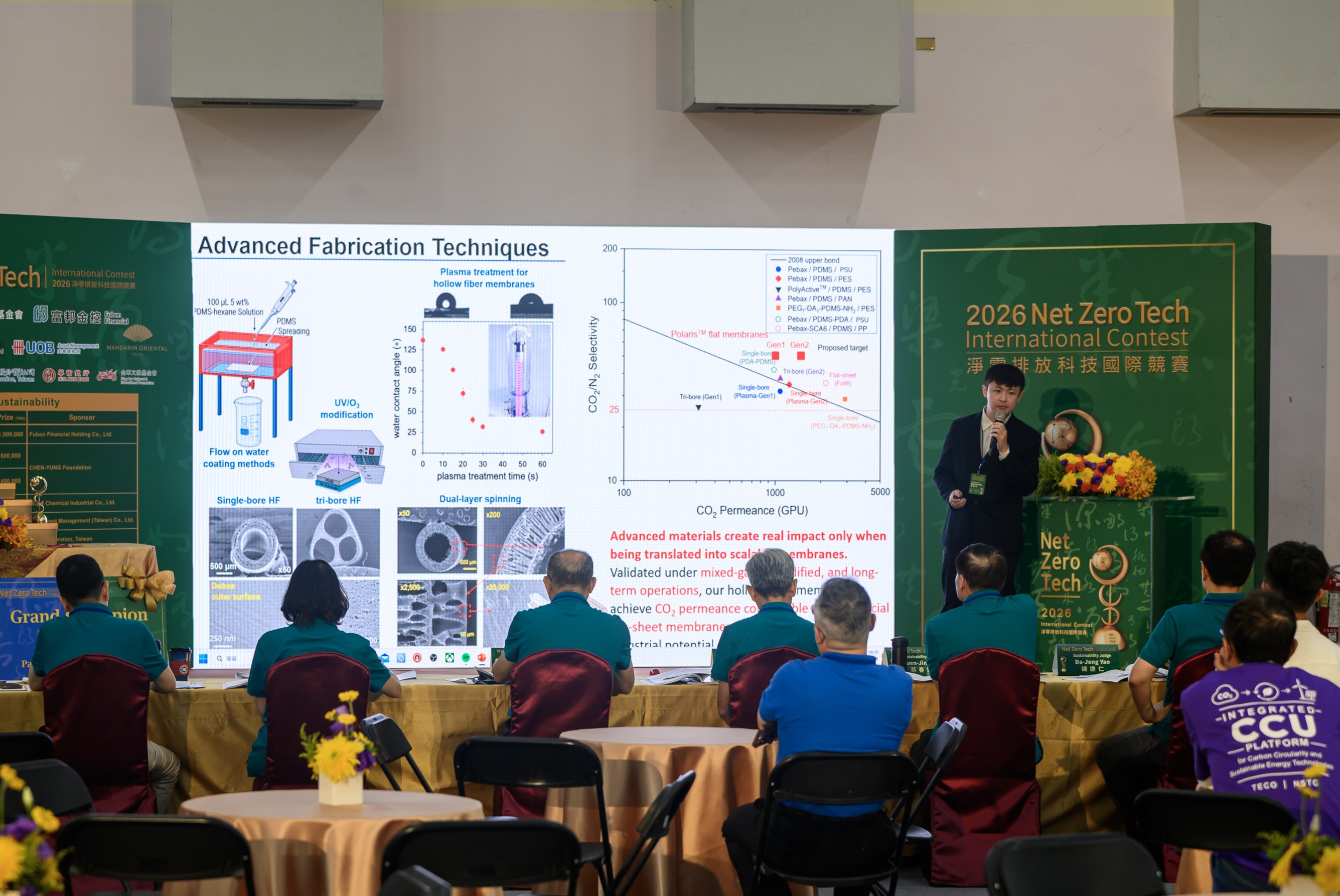
The team led by Tai-Shung Chung has progressively established a technological chain for developing innovative high-performance membrane materials, providing new technological solutions for reducing industrial carbon emissions and advancing clean energy development. The photograph shows team member Ching-Yun Chou explaining the fabrication and modification processes of hollow-fibre membranes.
A research team led by Professor Jia-Yaw Chang from the Department of Chemical Engineering received the Dahua Investment Trust Sustainable Technology Award in the Sustainability Category for its technology entitled "Black Mass Twin: Direct Regeneration of Spent Li-Ion Battery Black Mass into Dual-Energy Catalysts". The team has moved beyond the conventional recycling approach, which involves dismantling and crushing spent lithium-ion batteries into black mass before extracting valuable metals. Instead, it has developed an "ultrasonic cavitation–oxidative regeneration" technology that combines low-temperature surface purification, ultrasonic treatment, and oxidative activation, together with rapid X-ray fluorescence (XRF) analysis and functional compensation. This approach preserves the original electrochemical functionality of the black mass and transforms complex mixtures of spent lithium-ion battery black mass into energy materials, reducing the need for the high-temperature and chemical treatments typically required in conventional recycling processes.
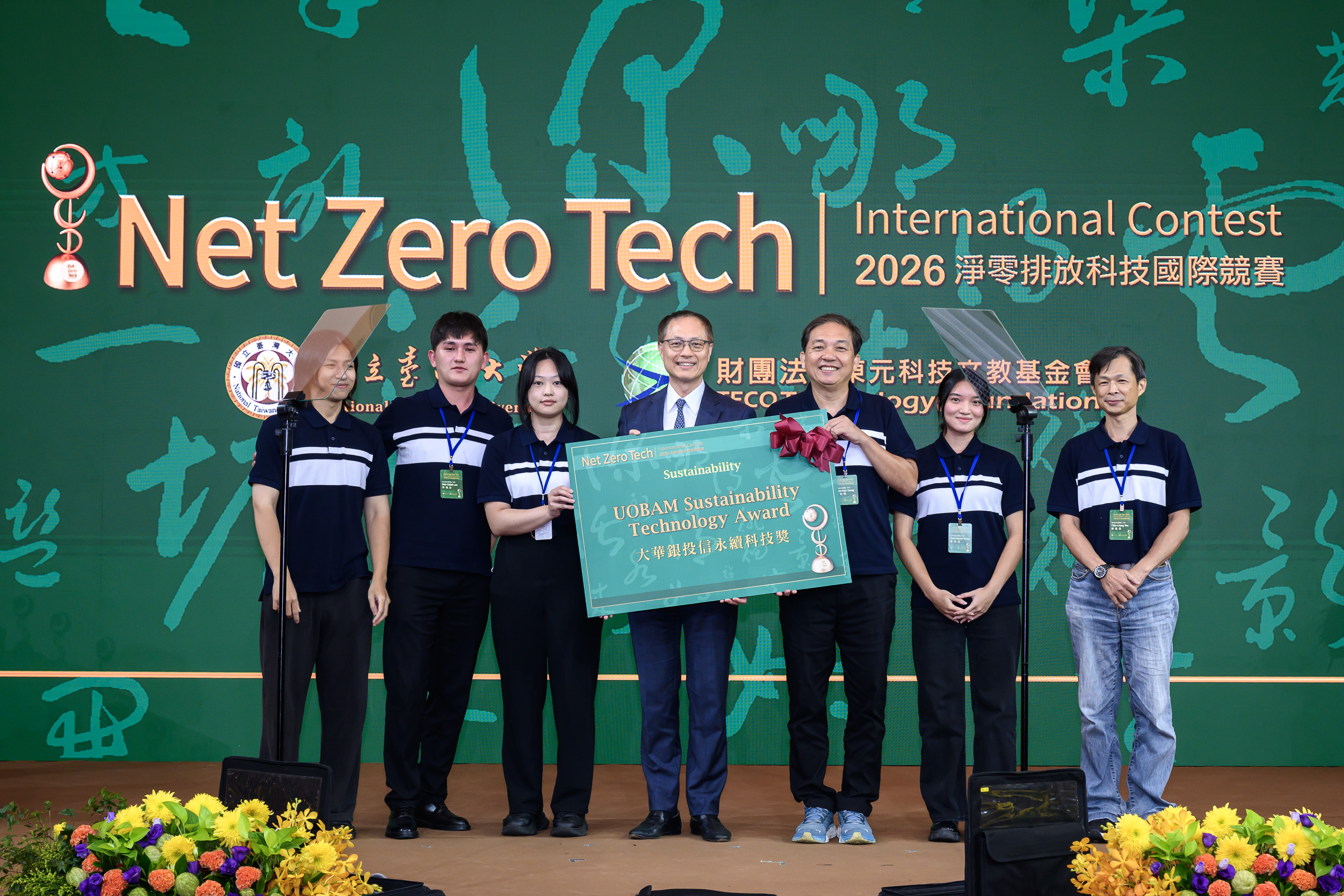
The team led by Professor Jia-Yaw Chang from the Department of Chemical Engineering uses ultrasonic cavitation–oxidative regeneration technology to transform complex mixtures of spent lithium-ion battery black mass into energy materials, reducing the need for high-temperature and chemical treatments in conventional recycling processes. The team received the Dahua Investment Trust Sustainable Technology Award in the Sustainability Category.
Professor Chang explained that different types of black mass exhibit distinct electrochemical properties. Black mass rich in nickel–manganese–cobalt (NMC) oxides is suitable for hydrogen production through water electrolysis, whereas black mass rich in lithium iron phosphate (LFP) exhibits better oxygen reduction capabilities and can be used in lithium–air batteries. This creates the possibility of upgrading discarded battery materials from conventional "metal recovery" into "dual-energy functional materials". To enhance the technology's practical applicability, the team developed graphite microporous electrodes that immobilise regenerated black mass within conductive structures, improving the transport of electrons, electrolytes, and gases. The technology has now completed prototype validation. Electrodes incorporating regenerated black mass have been integrated into an alkaline water electrolysis system, with a four-cell module achieving a hydrogen production rate of approximately 150 mL/min. The team has also completed integration with lithium–air batteries and wearable physiological sensing devices. Future development will focus on process standardisation, long-term stability, module scale-up, and industrial collaboration.
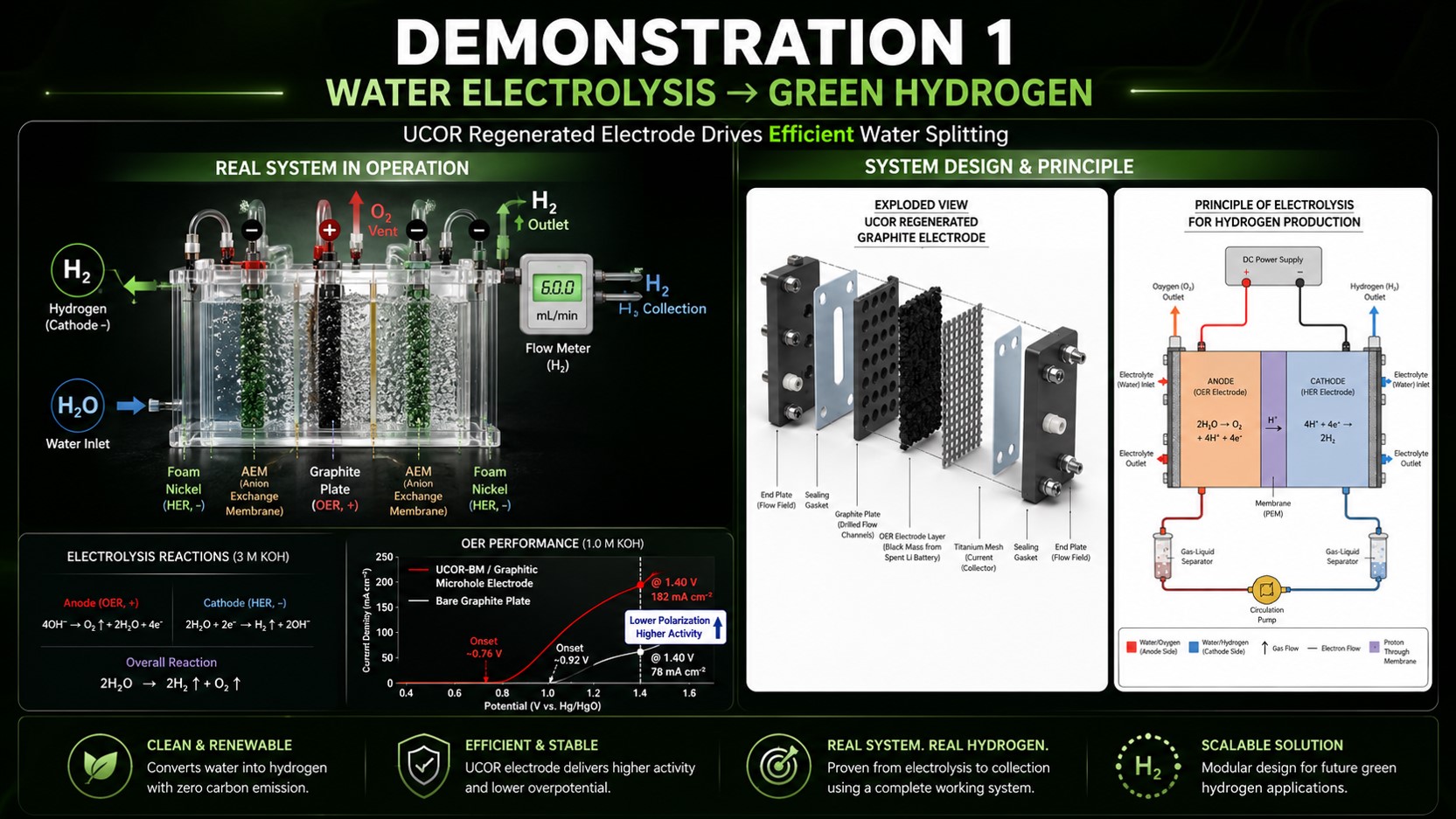
Black mass rich in nickel–manganese–cobalt oxides is suitable for hydrogen production through water electrolysis, while black mass rich in lithium iron phosphate exhibits better oxygen reduction capabilities. These materials therefore have the potential to become dual-energy materials required by future industries pursuing net-zero carbon emissions.
In addition, the technologies developed by Distinguished Professor Fu-Min Wang of the Graduate Institute of Applied Science and Technology, entitled "Bye bye CO2...Welcome Clean Energy!", and Associate Professor Yu-Hsun Chen of the Department of Mechanical Engineering, entitled "Design and Experimental Validation of a Scaled Prototype for a Wave Energy Conversion System with an Open Resonant Caisson", each received an Honourable Mention in the Sustainability and Energy Categories, respectively.