
National R&D Leaders gather at Taiwan Tech to shape research and talent strategies in the AI era.
The 14th National Conference of University and College R&D Directors (2026) was held on 15–16 October 2026 at the International Building of Taiwan Tech. Guided by the National Science and Technology Council (NSTC) and the Ministry of Education (MOE), organised by the Association of Taiwan Tech of the Republic of China, and hosted by Taiwan Tech, this year’s conference centred on the theme “Research Strategies and Talent Development in the Age of AI”. It brought together research and development (R&D) directors from universities and colleges across Taiwan, along with representatives from industry, government and academia, to discuss key strategies for transforming higher education research and development and competing for talent in Taiwan.
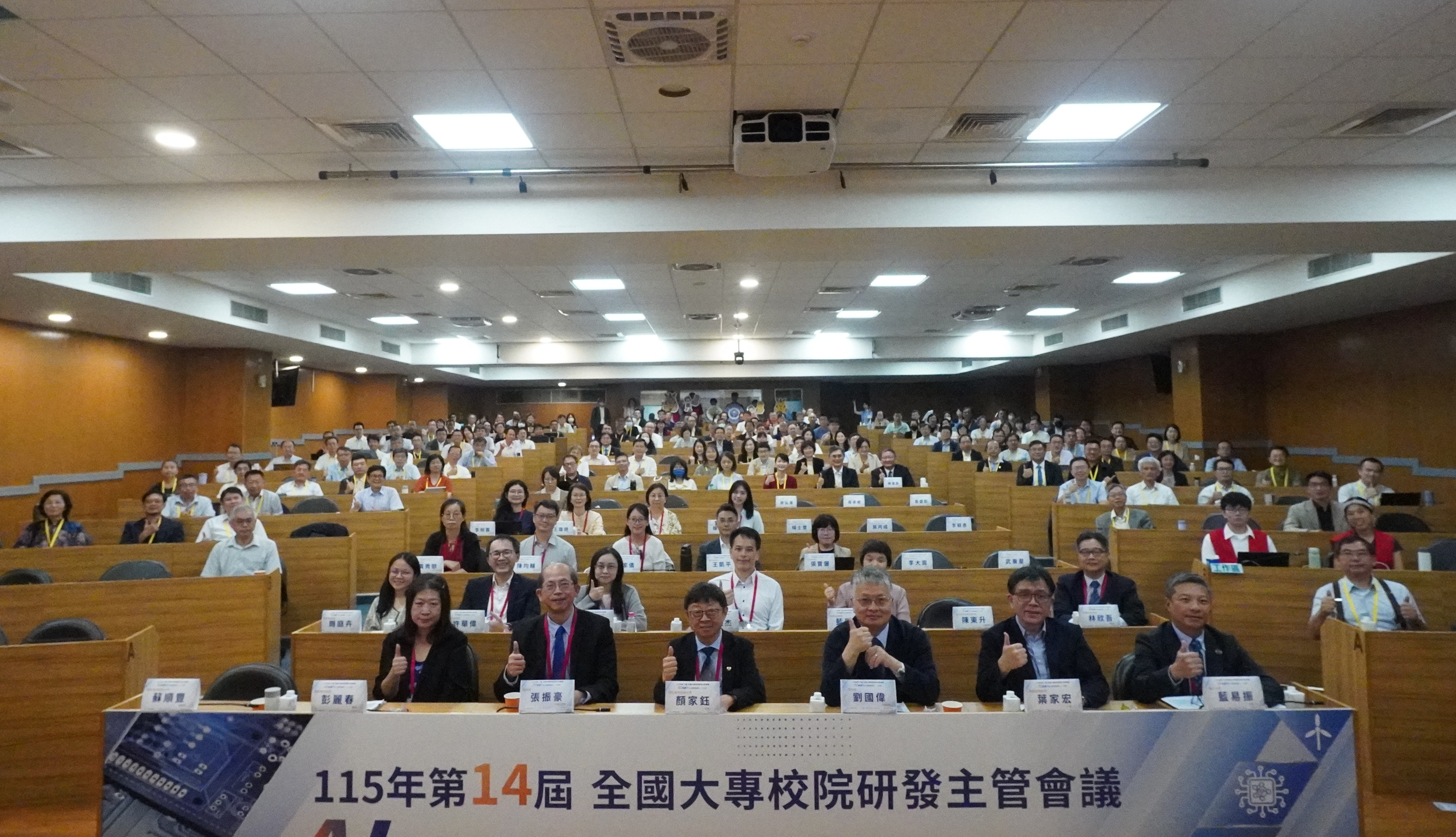
The 14th National Conference of University and College R&D Directors (2026) was held on 15–16 October at the International Building of Taiwan Tech.
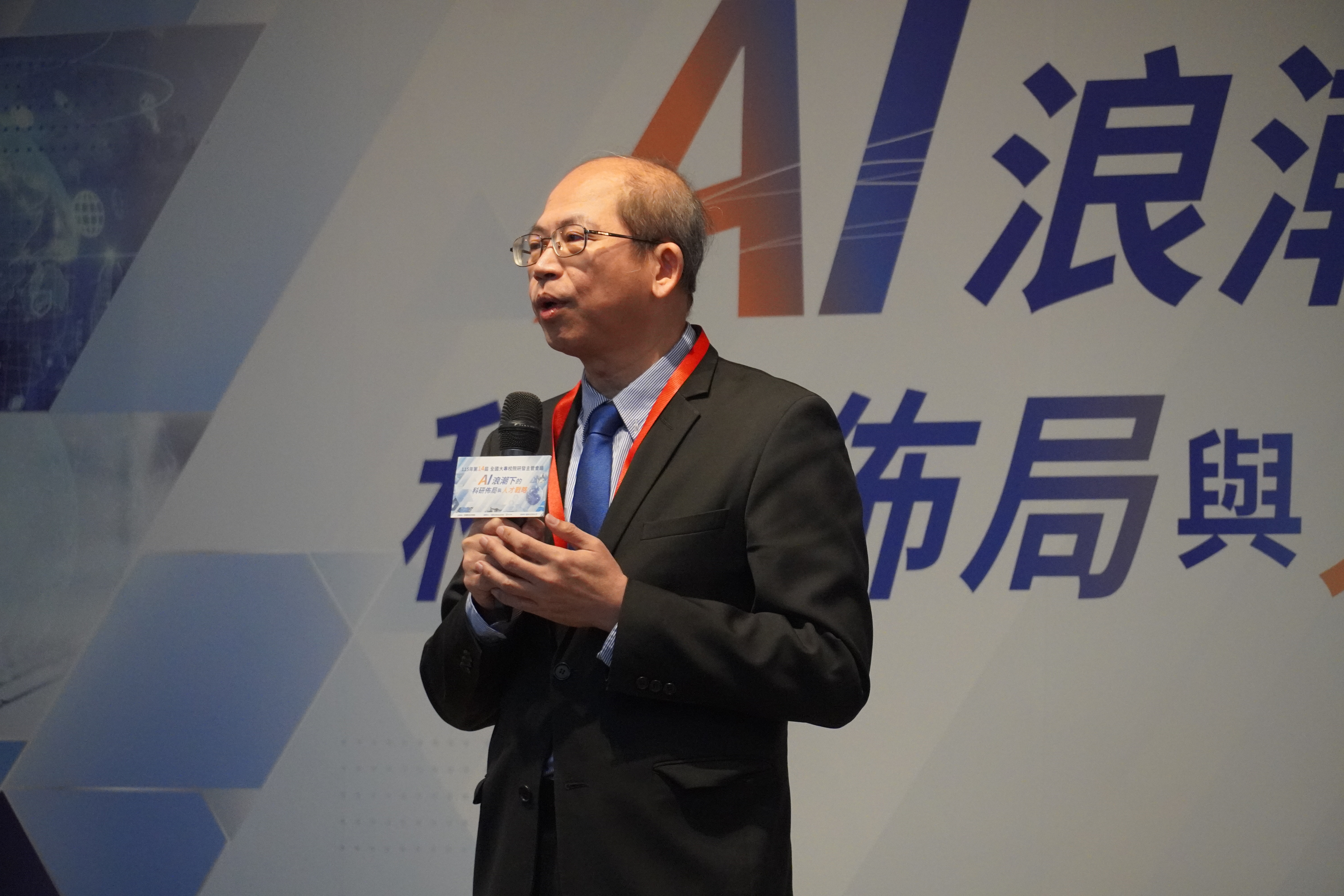
Taiwan Tech President Jia-Yush Yen welcomed the participants and noted that industry was paying close attention to the impact of the rapidly advancing AI wave. Taiwan Tech has long maintained close ties with industry and will continue to promote research and development and deepen industry–academia collaboration, ensuring that research outcomes and talent development respond to the needs of industry and society.

Taiwan Tech President Jia-Yush Yen delivers the welcome speech.
In his speech, Chen-Hao Chang, Political Deputy Minister of the National Science and Technology Council, observed that AI was advancing rapidly and that the conference theme was particularly timely. He outlined three key roles for the NSTC in the age of AI: advancing frontier AI research, promoting cross-disciplinary integration, and facilitating the practical application of technologies. With regard to cross-disciplinary integration, the NSTC is strengthening the application of AI in areas such as medicine, healthcare, food, clothing, housing and transportation. Drug development, for example, has traditionally been time-consuming and costly, with a low success rate; the introduction of AI to accelerate the development process is expected to lead to better outcomes. He also stressed the importance of AI talent strategies and development. Under the division of responsibilities between the NSTC and the MOE, the NSTC will focus on cultivating talent for AI research and development. Taiwan’s Basic Law on Artificial Intelligence has already been promulgated, but further progress will require collective efforts to safeguard the technological competitiveness of an intelligent nation.
Chen-Hao Chang, Political Deputy Minister of the NSTC, delivers an address.
In his remarks, Political Deputy Minister of Education Kuo-Wei Liu emphasised that, unlike the NSTC, which focuses on AI research talent, the MOE is responsible for developing AI talent through the education system. Starting in 2028, AI education will be incorporated as a compulsory component of the main framework of the Higher Education Sprout Project. The MOE is focusing on developing four key AI competencies: the ability to learn, the responsible use of AI, problem-solving skills, and the ability to perform tasks that cannot be replaced by AI. The last of these is particularly important. AI should be used as a personal tutor for students, a teaching assistant for teachers, and a support tool for managers. However, AI also creates challenges in terms of computing power and electricity consumption. The MOE is therefore seeking to secure public computing resources, with a portion allocated to university research, to support the development of AI research in higher education institutions.
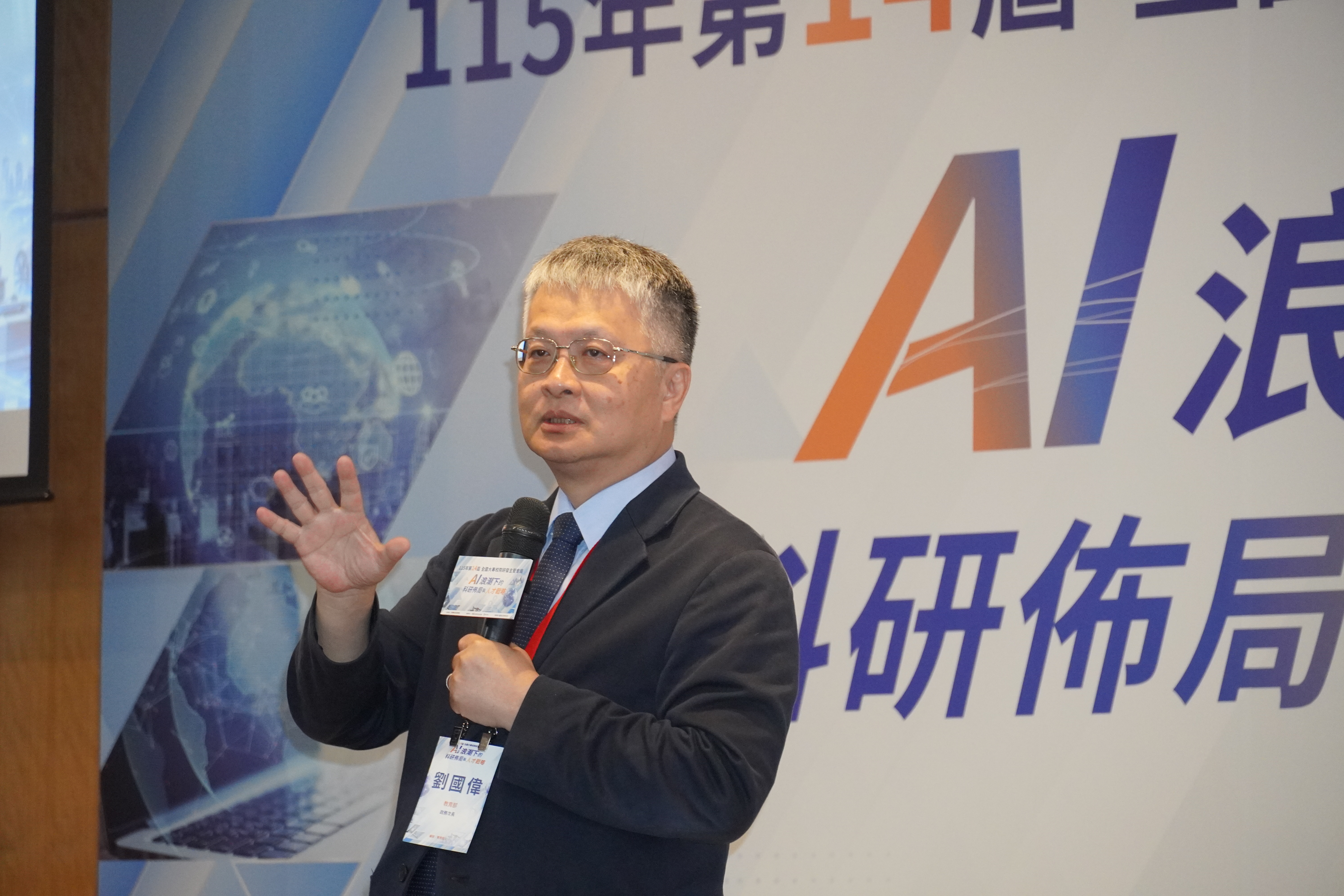
Political Deputy Minister of Education Kuo-Wei Liu delivers an address.
The first day featured two keynote presentations. Xin-Wu Lin, Vice President of the Taiwan Institute of Economic Research, delivered a talk entitled “Taiwan’s Strategic Role and Directions for Innovation in the Global AI Competition”. He highlighted the need for university research and development to accelerate system transformation by leveraging Taiwan’s strengths in semiconductors and information and communications technology (ICT). The second keynote, Educational Development and Challenges Driven by AI, was delivered by Distinguished Professor Dung-Sheng Chen of National Taiwan University. He analysed the current progress and challenges faced by 138 universities and colleges across Taiwan in four key areas: student learning, teaching, university governance, and industry–academia co-creation.
The conference also featured four thematic forums covering International Research Competition and Development Strategies, Talent Development and Competition in the AI Era, AI-Driven Research Strategies and Intellectual Property Commercialisation, and Research Governance, Ethics and Sustainable Development. Experts and scholars participating in the discussions included Ta-Sung Lee, Vice President of National Yang Ming Chiao Tung University; Professor Ping-Cheng Yeh of the Department of Electrical Engineering at National Taiwan University; Cheng-Wei Liao, Director General of the Intellectual Property Office; and Chien Chou, Vice President of National Yang Ming Chiao Tung University.
The conference successfully fostered a shared vision among R&D directors from universities and colleges across Taiwan. Through close collaboration among industry, government and academia, the participants hope to build a resilient research and talent ecosystem for Taiwan that is equipped to compete internationally.
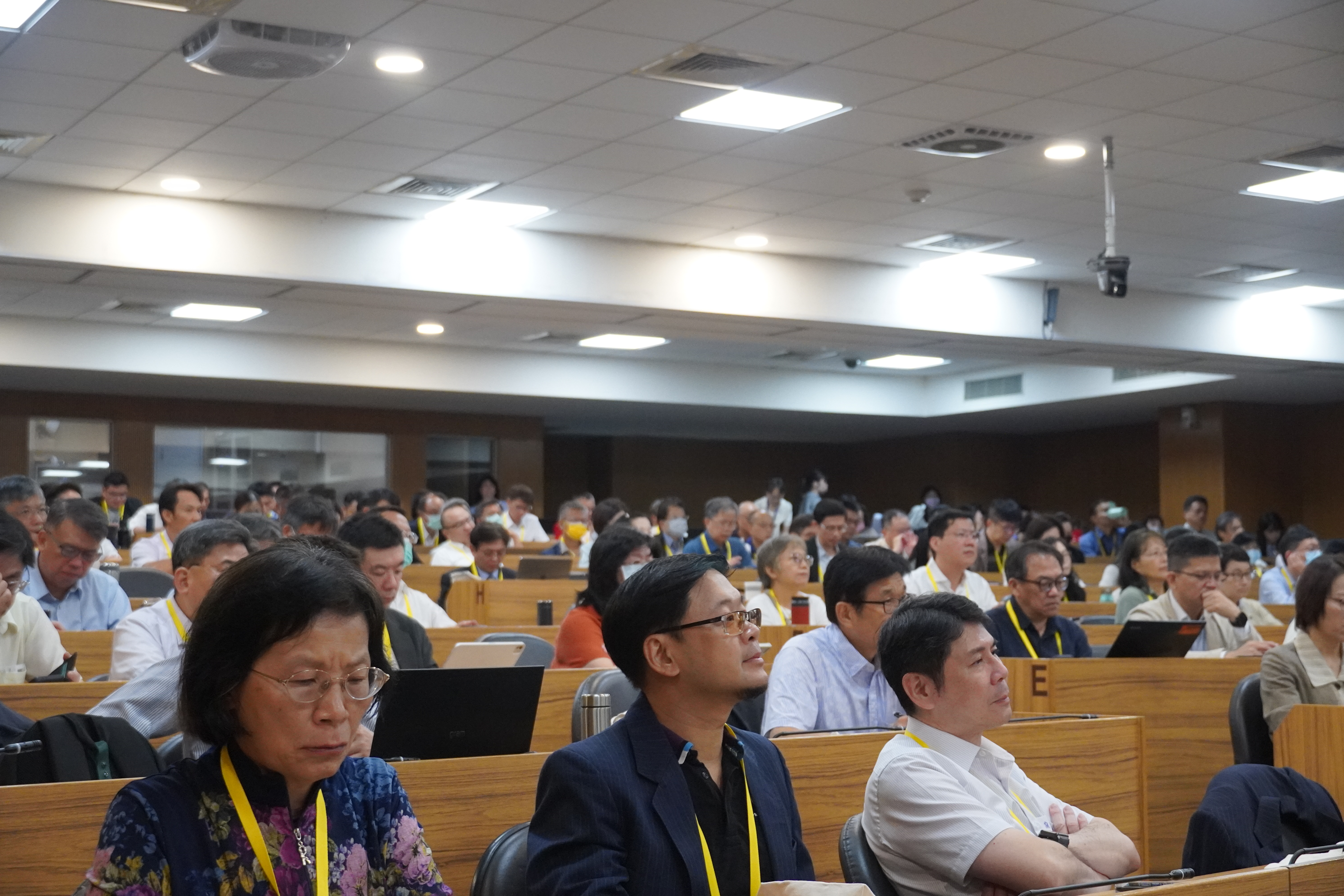
The 14th National Conference of University and College R&D Directors (2026) brought together R&D directors from universities and colleges across Taiwan and representatives from industry, government and academia.