
Taiwan Tech’s Summer EMI Academic English Program prepares 170 new Students for English-Medium Instruction.
To help new students adapt to an English-Medium Instruction (EMI) environment before starting university and to respond to the growing proportion of university courses taught in English under the Ministry of Education’s 2030 Bilingual Policy, the Language Center at Taiwan Tech has offered its online summer EMI Academic English Preparatory Program annually since 2022. The program enters its fifth year in 2026. The 2026 programme ran from 21 August to 1 September. It was jointly organised by the various colleges under the leadership of Professor Shao-Ting Hung, Dean of the College of Liberal Arts and Social Sciences and Director of the Language Center. The opening ceremony was attended by Professor Chun-Tao Chen, Vice Dean of the College of Engineering; Professor Ming-Huang Lin, Dean of the College of Design; Professor Jeng-Shiou Leu, Dean of the College of Electrical Engineering and Computer Science; and Professor Kuo-Tsan Liu, Vice Dean of the College of Applied Sciences, who offered encouragement to the participating students. A total of 170 incoming undergraduate students for the 2026 academic year (Academic Year 115 in the Republic of China calendar) enrolled in this year’s programme. Through structured training and learning activities, the programme aimed to help them develop the English proficiency and confidence needed to study in an EMI environment.
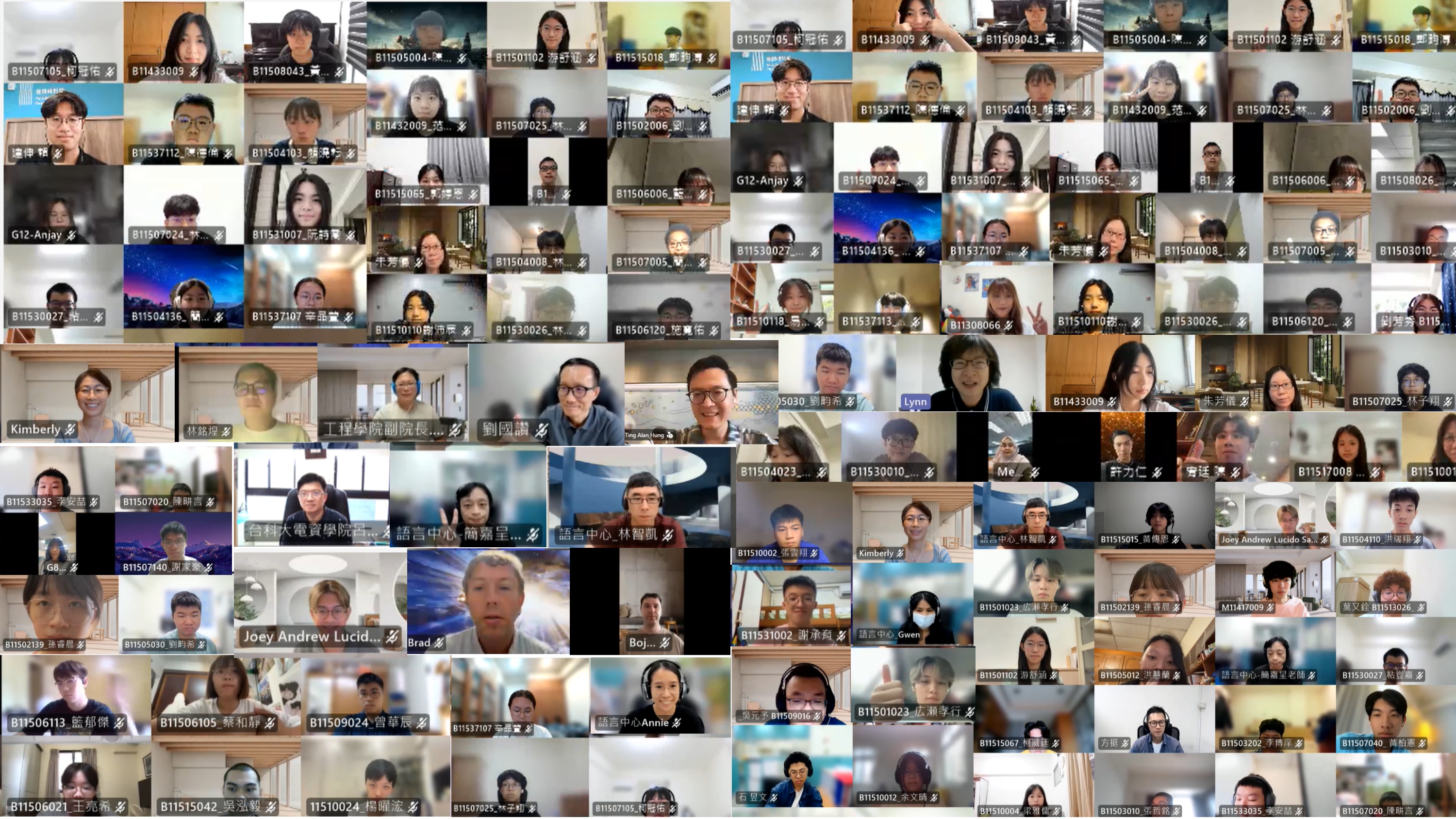
Group photo taken online at the opening ceremony of the summer program, with teachers and students gathering to mark the occasion.
The programme was offered free of charge and combined the advantages of synchronous and asynchronous online learning. Rather than focusing on general English, it used authentic materials from professional textbooks and real classroom situations to develop the listening, speaking and reading skills required for EMI courses. The programme comprised approximately 20 hours of instruction. Its content included an introductory module entitled “Understanding EMI”; six online micro-courses covering a range of topics, from which students selected two to complete; and synchronous classes on “Oral Communication in Classroom Situations” and “Disciplinary Vocabulary (Calculus or English for Art) and Classroom English”. The six micro-course topics covered English learning through the Sustainable Development Goals (SDGs), interpreting infographics, academic presentation skills, classroom English, English pronunciation, and multiliteracies and multiculturalism. Students who completed the programme and met the minimum passing requirements were eligible to receive one credit towards the university’s compulsory English course requirement under the multidisciplinary curriculum.
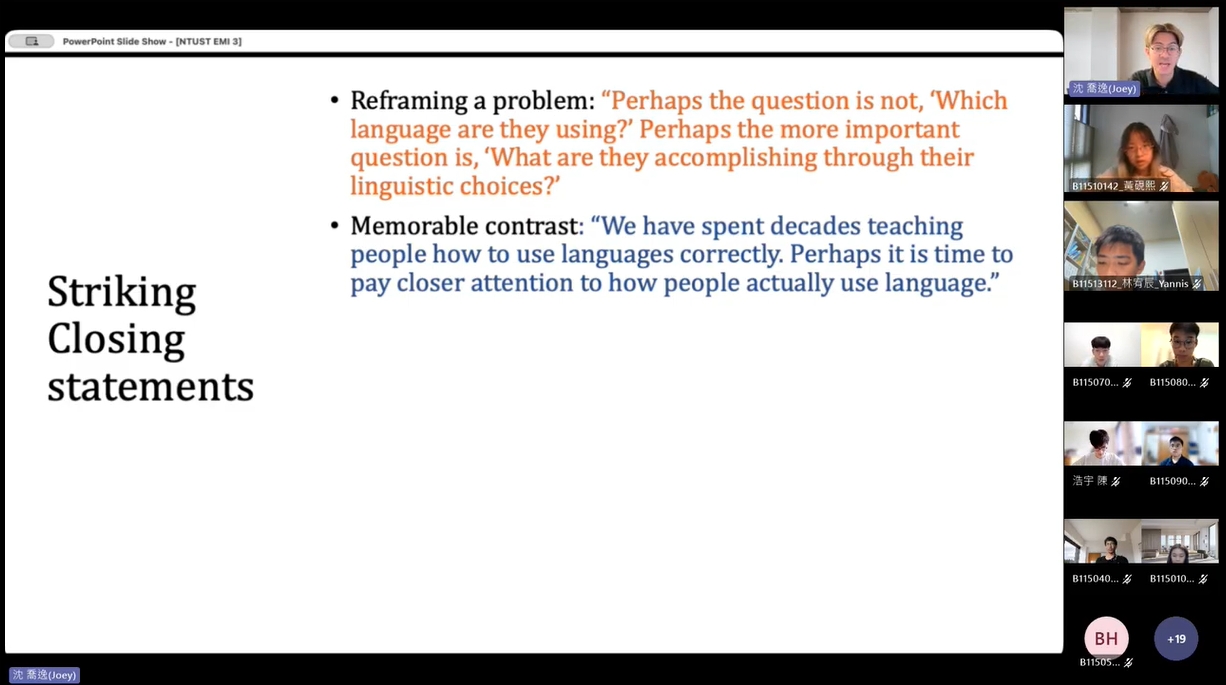
In the synchronous course “Oral Communication in Classroom Situations”, taught by a foreign instructor, students take part in classroom activities to practise spoken English and interactive communication.
Professor Shao-Ting Hung, Director of the NTUST Language Center, noted that 170 incoming students from all six colleges at Taiwan tech enrolled in this intensive programme. The results showed measurable improvements in students’ academic English proficiency: the average total score increased from 259.82 in the pre-test to 282.71 in the post-test, representing an overall gain of 22.89 points. These results suggest that the intensive programme helped strengthen students’ academic English skills and confidence in learning in EMI classrooms. In addition, the post-course survey showed that nearly 80 per cent of students recognised the learning benefits of the programme, with overall feedback indicating a highly positive learning experience.
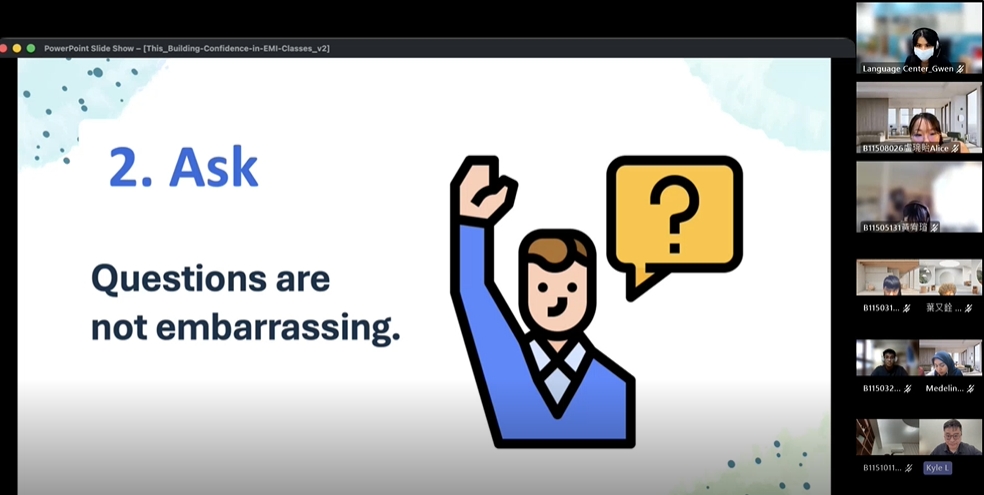
Three Language Center instructors jointly teach the synchronous EMI introductory sessions, helping new university students understand EMI courses and ease their learning anxiety.
In terms of learning materials and student outputs, the asynchronous component produced 100 instructional videos and 532 practice questions, allowing students to study independently at their own pace. For the synchronous component, students completed speaking assignments through the Padlet platform, generating a total of 612 recorded speaking submissions. These outputs demonstrated students’ active use of English to express themselves and interact in classroom-based situations.
The program also brought together 26 English-language and subject-specific teaching assistants from 12 departments and six countries. They provided ongoing instructional support, individual learning guidance and timely assistance throughout the programme. This ensured that students received the support they needed during the intensive course and could gradually build the confidence and skills required to communicate academically and study their subject areas in English.
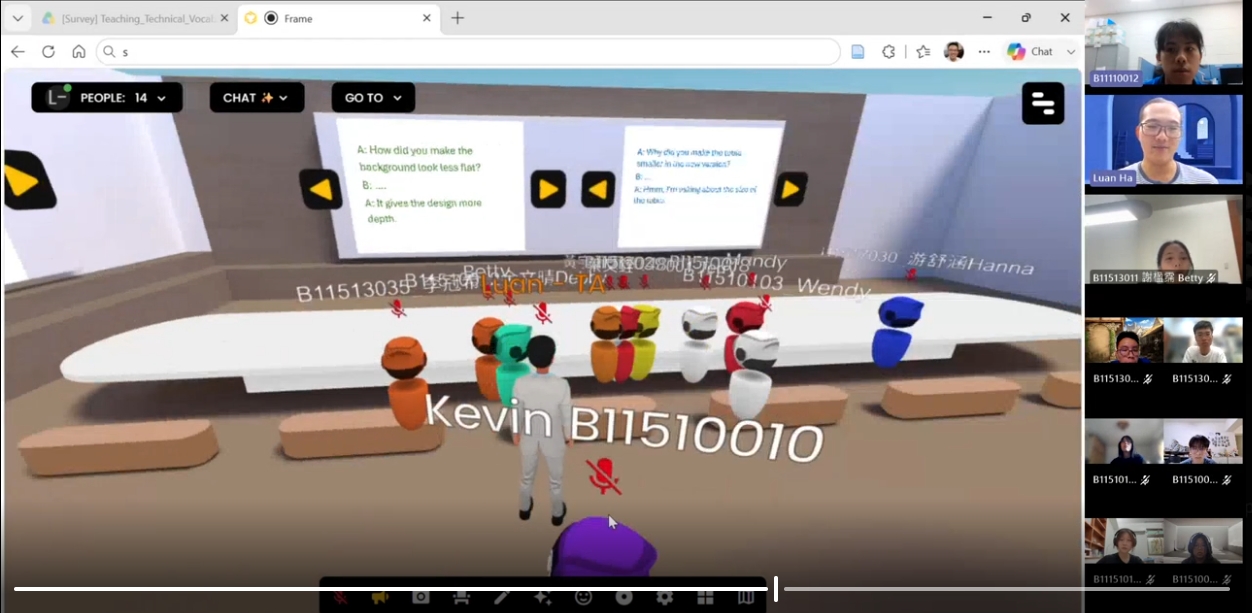
English-language teaching assistants jointly deliver the “Classroom English” and “Academic Vocabulary” courses. The academic vocabulary course for the arts incorporates metaverse-based teaching activities to engage students in English learning and interaction.
Since its launch in 2022, the EMI Academic English Preparatory Program has accumulated five years of experience in preparing students for English-medium instruction. By providing preparatory training before students enter university, supporting their learning in EMI classrooms in the medium term, and contributing to the long-term development of bilingual professionals with international mobility, the programme will continue to serve as an important bridge helping Taiwan Tech’s new students transition into an English-medium learning environment.