
Taiwan Tech’s Hsiu-Yang Tseng wins Ta-You Wu Memorial Award for breakthrough cooling and heat-transfer technology.
Hsiu-Yang Tseng, an associate professor in the Department of Mechanical Engineering at Taiwan Tech, has long focused on research in heat-transfer technology, semiconductor processes, and biomedical engineering, with applications spanning thermal management, the semiconductor industry, and medical technologies. In recent years, building on surface science and two-phase fluid mechanics and integrating advanced micro-/nano-fabrication techniques, he has pursued forward-looking research centered on heat transfer and high-speed cooling. His work aims to significantly enhance cooling efficiency and has led to several key breakthroughs, including boiling heat-transfer and high-speed cooling technologies, cryopreservation techniques, and microfluidic diagnostics. For these achievements, he was honored with the 2025 Ta-You Wu Memorial Award.
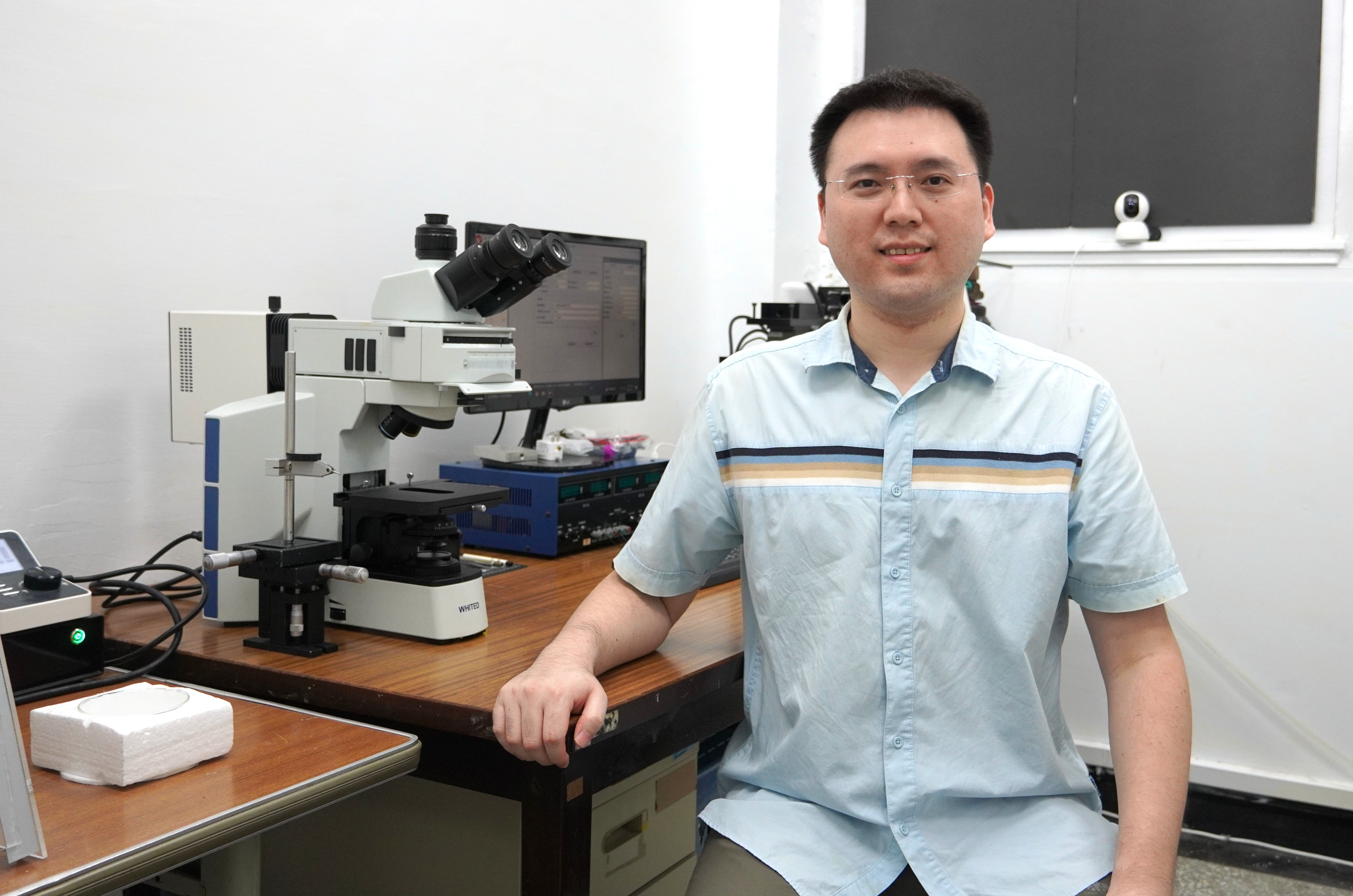
Hsiu-Yang Tseng, an associate professor in the Department of Mechanical Engineering at Taiwan Tech, has integrated advanced micro- and nano-fabrication technologies to pursue forward-looking research centered on heat transfer and high-speed cooling. His work aims to improve thermal management efficiency and has resulted in several key innovations, including boiling heat-transfer and high-speed cooling technologies, cryopreservation methods, and microfluidic diagnostics. He was honored with the 2025 Ta-You Wu Memorial Award for these achievements.
As the demand for efficient thermal management and cooling technologies continues to rise in high-tech industries, Hsiu-Yang Tseng’s team has enhanced heat-transfer performance by modifying surface properties to suppress the vapor-film effect that occurs during boiling cooling, boosting heat-transfer efficiency by several times and dramatically accelerating cooling rates. Tseng has also applied this technology to the field of cell preservation, enabling cells to be rapidly cooled in an extremely short time to prevent ice-crystal formation and the resulting cellular damage, successfully achieving vitrification. He noted that this technology can be used for the cryopreservation of cells such as cord blood, sperm, and oocytes, and also holds potential for future applications in electric-vehicle and AI data-center cooling systems.
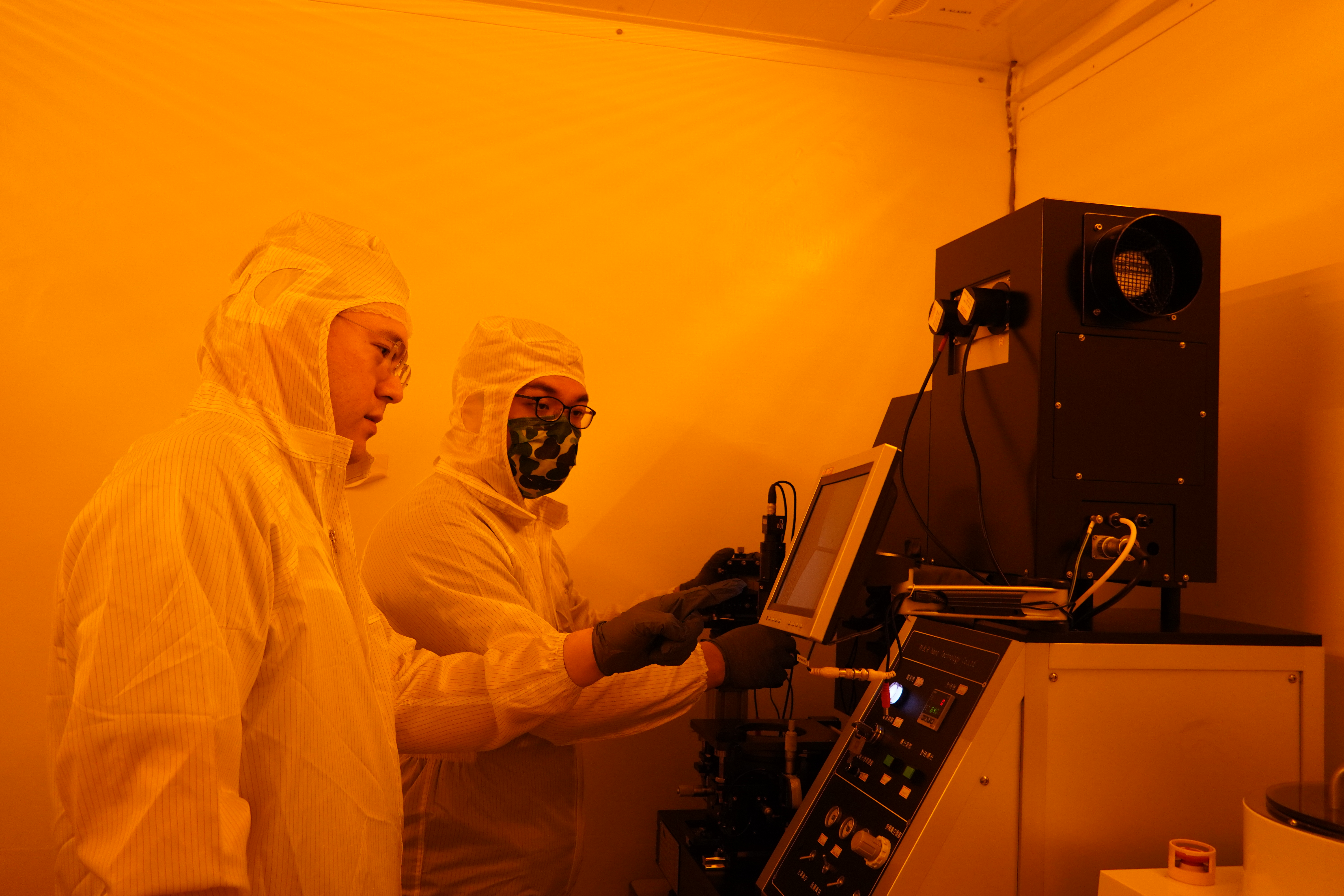
Hsiu-Yang Tseng leads the Thermal-Fluid MEMS Laboratory and has personally overseen all aspects of its early development, including facility setup and student training. The photo shows Tseng (left) and Mechanical Engineering student Cheng-Hsuan Tung (right) operating a mask aligner in the cleanroom to carry out photolithography processes.
Hsiu-Yang Tseng has pursued academic excellence while maintaining close collaborations with industry. For several consecutive years, he has led industry–academia projects with TSMC, focusing on improving yields in advanced semiconductor processes and solving heat-transfer challenges. He has also worked with companies such as HIWIN Technologies to develop innovative solutions to thermal issues in high-precision machining. These collaborations have deepened his understanding of the importance of forward-looking research. “In academia, our strength lies in exploration and inquiry; in industry, the strengths are optimization and mass production,” Tseng noted. He believes that only through academic leadership and trial-and-error experimentation can new technologies be guided in the right direction, helping industries break through limitations, identify new opportunities, and realize greater value-ultimately creating a virtuous cycle and a win-win outcome.
Before returning to Taiwan Tech to teach, Tseng spent more than 13 years abroad pursuing advanced studies and working in R&D and start-ups. He recalls, “In my student days, the best students in the lab always prioritized becoming professors, and considered it an honor to teach at a research university.” He firmly believes that scientific research is the driving force of national progress and the foundation of competitiveness. Motivated by a desire to give back, he returned home hoping to strengthen Taiwan through technological innovation and his own professional contributions.
Receiving the Ta-You Wu Memorial Award is a meaningful recognition for Tseng, but it also carries the imprint of many hardships. Modest and reserved by nature, he admits that the research process has been challenging, often requiring him to step outside his comfort zone, as solutions frequently emerge from other disciplines-one reason he values “cross-disciplinary innovation.” Throughout his work in research, teaching, and leading his team, he has faced skepticism and challenges that pushed him to reflect on, and even question, long-held values, the meaning of academic research, and the purpose of higher education. Yet this award has dispelled his doubts and inner conflicts, reminding him that he is not alone and reaffirming his conviction that he is on the right path.

Hsiu-Yang Tseng guides his laboratory student Yi-Ming Hsiao in conducting ultra-fast cooling experiments and observing phenomena such as liquid-film formation and nucleate boiling. This technology is expected to be directly applied in future to cell vitrification and the biobanking industry.
Hsiu-Yang Tseng currently teaches courses in fluid mechanics, heat transfer, and engineering economics, and participates in the Ministry of Education’s smart manufacturing program by offering microfabrication laboratory courses. He is passionate about teaching and has been recognized for his efforts with two university-level Teaching Excellence Awards, one Outstanding Mentorship Award, and has been voted Outstanding Teacher by Mechanical Engineering students four times. He also serves as the associate chair of the Department of Mechanical Engineering, assisting with departmental administration and management. He believes that research, teaching, and administrative work are not mutually exclusive, but rather form a complementary cycle: research deepens teaching, while teaching and administrative duties help him better understand the evolving needs of the educational environment.
Tseng likens the teacher-student relationship to “a seasoned captain guiding a novice first mate,” saying, “When navigating uncharted waters, sometimes I feel like Columbus, unsure whether the next step will reveal a new continent.” He emphasizes that the core of higher education is to cultivate students’ ability to think independently and solve problems, rather than to passively receive knowledge and skills through rote learning. He hopes that, through the journey with him, students gradually accumulate experience and eventually become capable captains who can explore new territories on their own.
For this reason, Tseng places special emphasis on developing students’ attitudes and thinking skills, striving to cultivate practicality, innovation, and adaptability. Yong-Ming Ye, a third-year doctoral student, shares that what he has learned most from Tseng is the “spirit of perseverance in the face of difficulties.” In addition to guiding experiments, Tseng’s laboratory emphasizes critical thinking, and discussions among students often spark creative ideas.
Tseng also encourages young researchers to “avoid following trends” and instead develop their own ideas and vision. He advises them to carefully identify problems, innovate boldly, and solve them, rather than chasing short-term popularity. Only by doing so can students navigate the course of research and career development steadily and create their own new horizons.
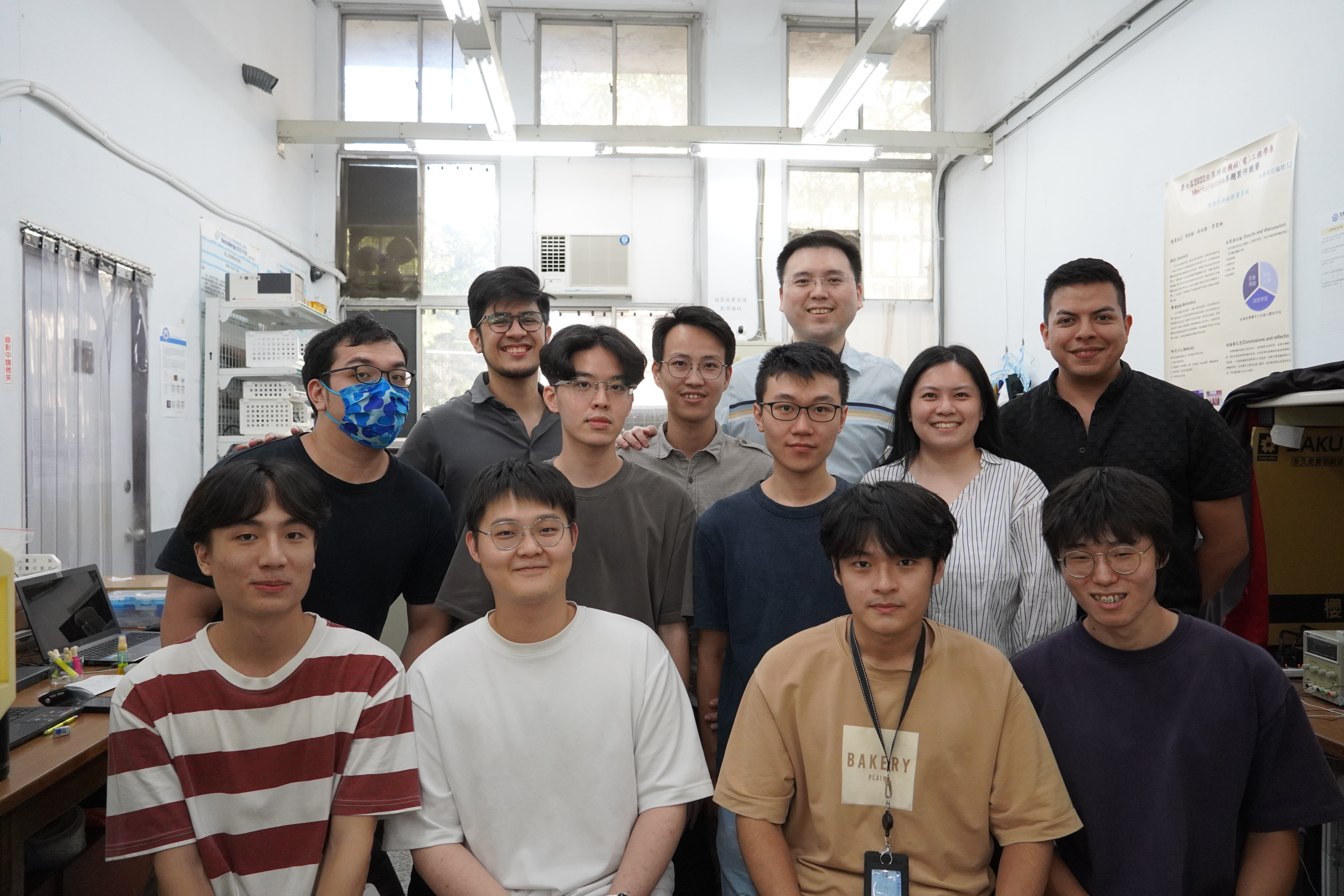
Hsiu-Yang Tseng’s laboratory includes four doctoral students, six master’s students, and six part-time master’s students, among them doctoral students from Nicaragua and El Salvador.