
Taiwan Tech Mobile Engineers excel in Indonesia, Japan, and Vietnam, showcasing outstanding practical skills.
Since its launch in 2020, the “Engineers in Action (EIA)” program of Taiwan Tech has continuously integrated academic learning with real-world engagement. The program leads students into local communities and international settings, applying engineering expertise and design thinking to promote rural infrastructure development, optimize educational environments, and establish disaster prevention systems.
During the summer of 2025, the EIA teams further expanded their reach to Indonesia, Japan, and Vietnam, collaborating with several international university partners. Through these initiatives, they deepened the core spirit of “taking action to fulfill social responsibility”, showcasing the achievements of interdisciplinary learning and sustainable practice.

The Taiwan Tech Engineers in Action (EIA) team once again set out on an international journey, carrying out field projects in Indonesia, Vietnam, and Japan.
In Pacet Village, Indonesia, Taiwan Tech collaborated with Sepuluh Nopember Institute of Technology ( (ITS) and Osaka Institute of Technology (OIT) to engage in agricultural and environmental projects. The students not only repaired greenhouses and built crop dryers and composting systems but also helped local farmers promote resource recycling and improve agricultural productivity. In addition, they organized “Handmade Soap” and “Eco-Bag Painting” workshops, allowing community members and children to learn about sustainability through hands-on activities while fostering cultural exchange and building lasting cross-cultural friendships.
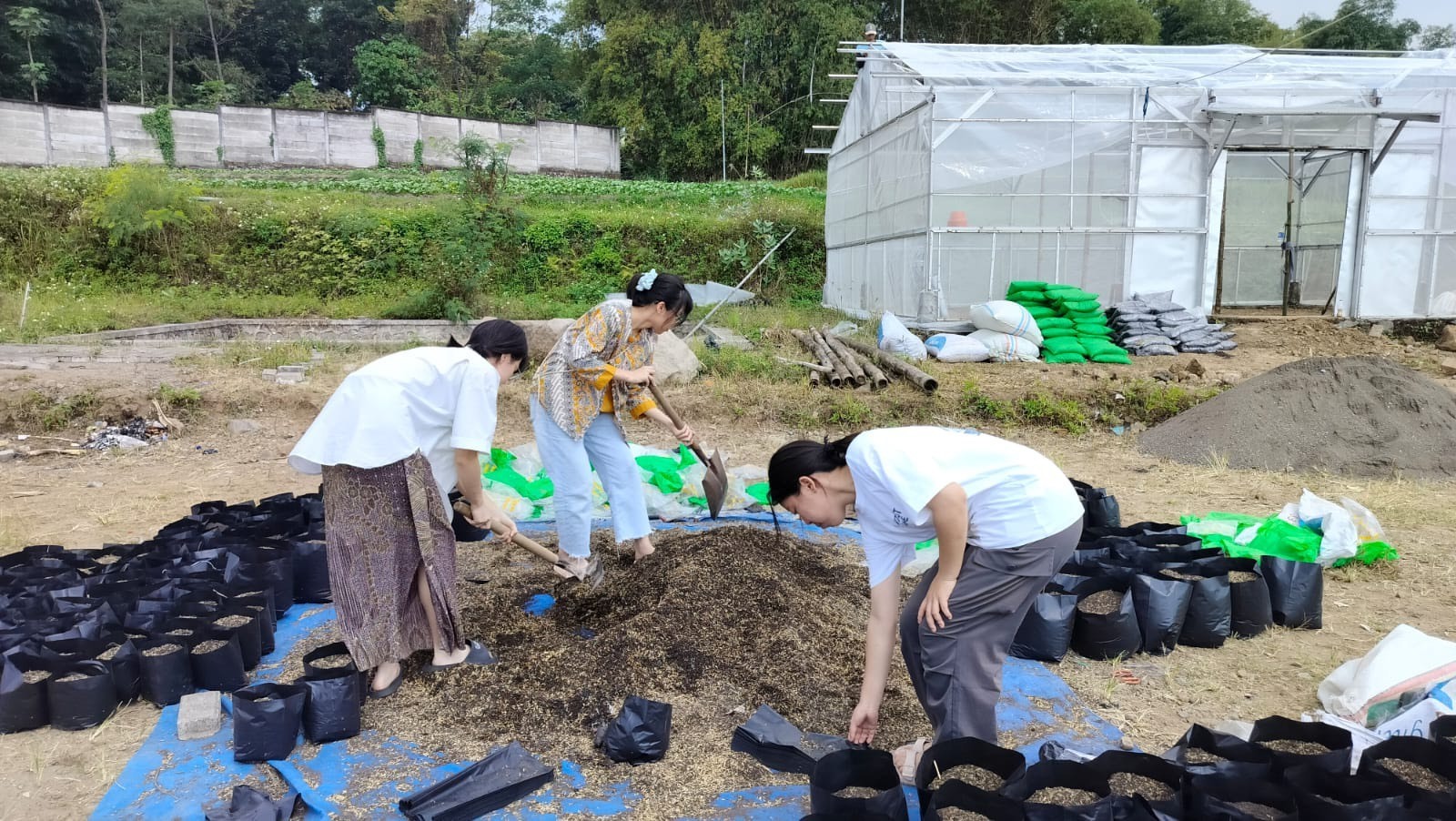
The team carried out a greenhouse restoration project in Pacet Village, Indonesia, to improve local agricultural quality.
Another team collaborated with Widya Mandala Catholic University in Indonesia to promote community development in the Gubug Lazaris area. The students helped repair roofs, install water pipes and electrical wiring, and set up an automatic watering system that demonstrated smart applications through programming. These efforts not only enhanced the community’s capacity for self-sustained development but also provided valuable hands-on experiences for students to apply their professional knowledge in solving real-world problems.
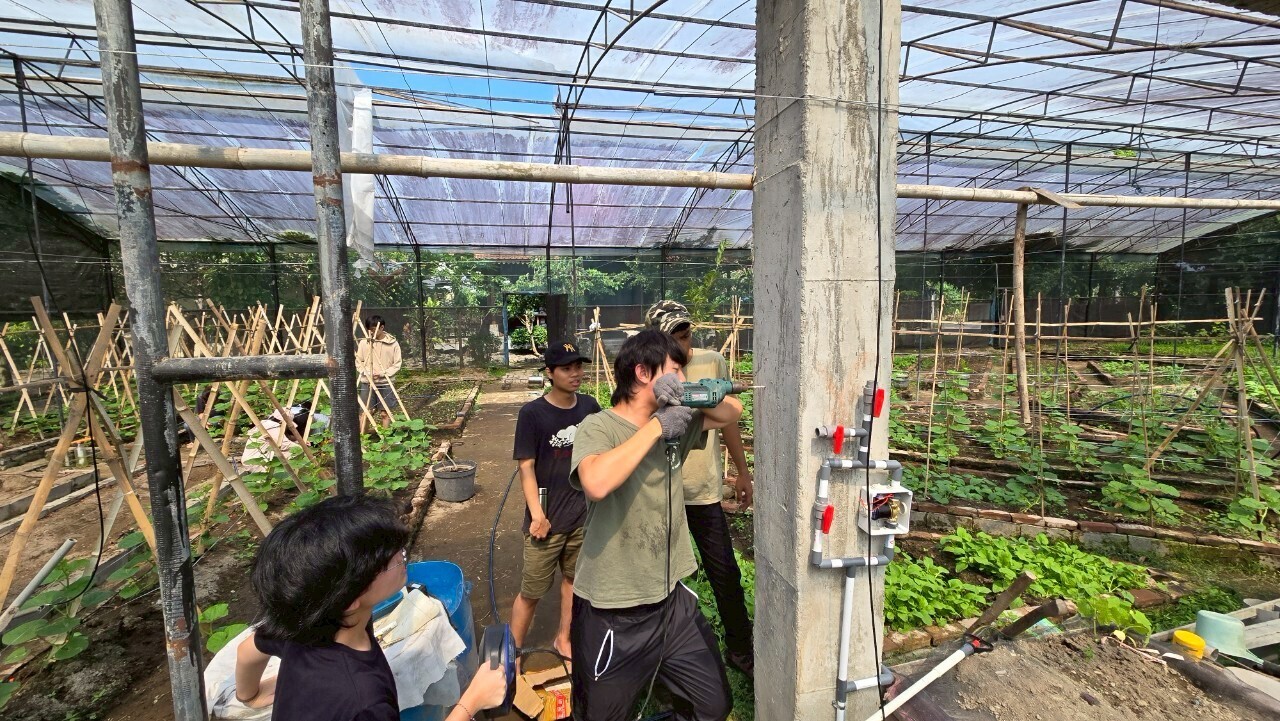
The team restored an organic greenhouse that had been left unused during the pandemic and installed an automatic watering system to assist with irrigation.
Chang-Chi Huang, a senior in the Department of Design, and Yu-Kai Huang, a junior in the Department of Chemical Engineering, shared that although resources were limited in rural elementary schools in Indonesia, their arts and crafts classes were remarkably creative - even featuring shadow puppet props! During the short 15-day stay, they became close friends with the local participants, who were always ready to lend a helping hand. When it came time to say goodbye, tears welled up in their eyes as they sincerely hoped to reunite and collaborate again in the future. Their heartfelt reflections vividly illustrate that international cooperation fosters not only professional exchange but also deep emotional bonds and cultural understanding.
In late July, the team visited Kawakami Village in Nara Prefecture, Japan, where they collaborated with Osaka Institute of Technology to promote disaster prevention and local revitalization initiatives. The students installed a “Post-Earthquake Building Safety Rapid Assessment System”, sponsored by Infini-Tech Solutions Co., Ltd, at a local evacuation shelter and created multilingual evacuation signs to enhance disaster response efficiency. In addition, the team assisted in developing local specialty agricultural products, applying design thinking to create community-based branding that promotes agricultural value and brings sustainable vitality to the local economy.

The team collaborated with local residents in Kawakami Village, Nara, Japan, to develop regional agricultural products and promote local agricultural revitalization.
In mid-August, the Engineers in Action team once again crossed the sea, arriving at an elementary school in the suburbs of Can Tho, Vietnam, to collaborate with Can Tho University (CTU) in creating a more child-friendly learning and recreational environment. The students built outdoor reading corners, simple playground equipment, and a soccer field - enhancing not only the school’s learning space but also providing children with a joyful and safe place to grow. These efforts helped bring more equitable access to educational resources in rural areas and embodied the belief that “education is hope.”
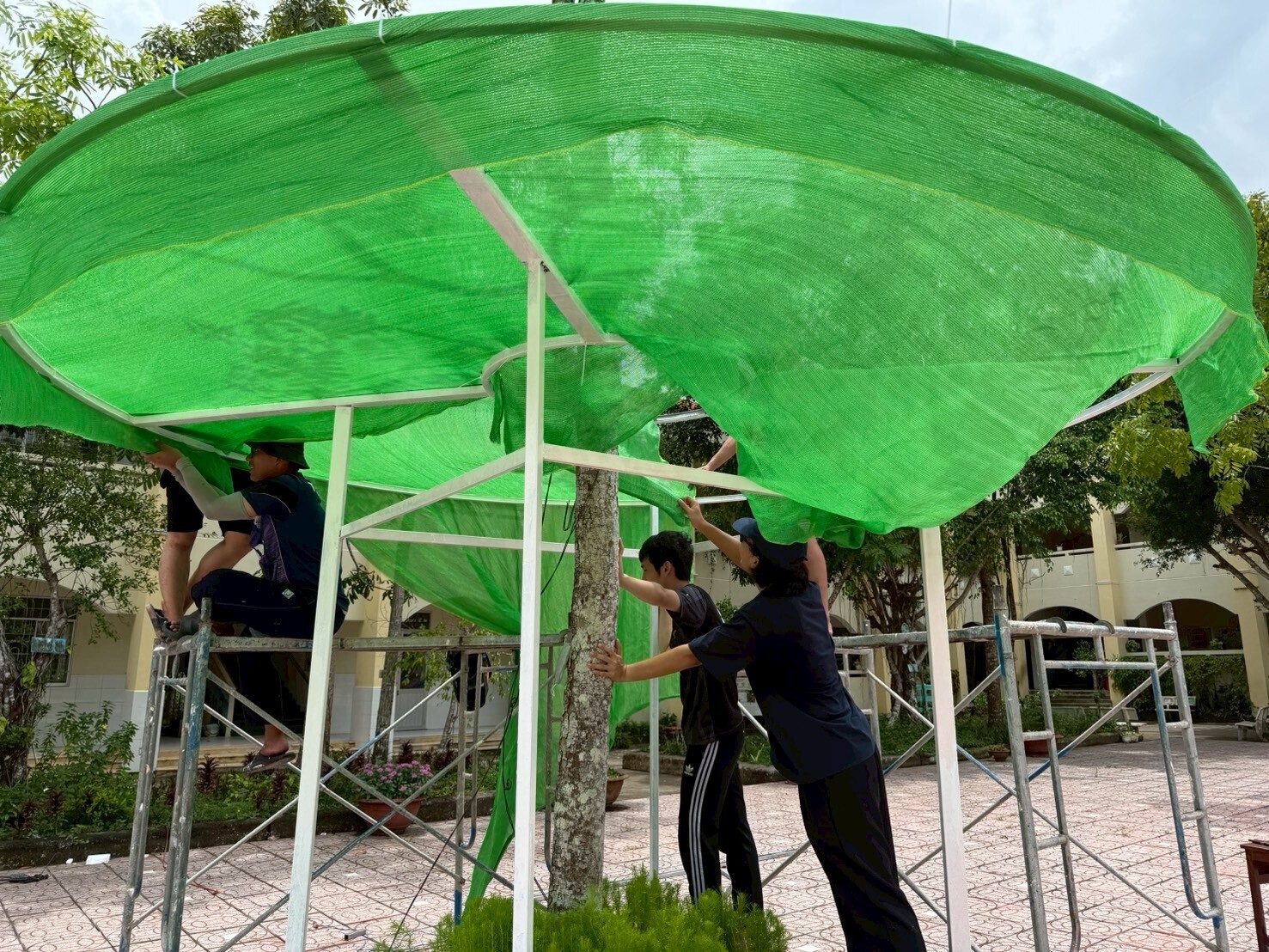
The team set up an outdoor reading corner at Long Tuyen 2 Elementary School in Vietnam, providing children with more learning spaces within the campus.
Through this year’s cross-disciplinary initiatives across multiple countries, Taiwan Tech students not only transformed classroom knowledge into practical solutions but also developed empathy, global vision, and teamwork through intercultural exchange. The Engineers in Action program exemplifies the university’s deep commitment to University Social Responsibility (USR), putting into practice the educational mission of “starting locally, caring globally.” In September, the team was invited to participate in the Osaka World Expo, where they showcased their projects and shared their achievements, bringing Taiwan Tech students’ hands-on experiences to the international stage and demonstrating the power of USR in action. Moving forward, the program will continue to collaborate with domestic and international partners to promote more diverse global initiatives, further expanding Taiwan Tech’s international influence and infusing society with continuous positive energy through education and purposeful action.