
Taiwan Tech Office of Bilingual Education Initiatives holds EMI Teacher Training at UC Irvine, exchanging global classroom insights.
To enrich the teaching skills of EMI instructors across various fields, the Taiwan Tech Office of Bilingual Education Initiatives partnered with the College of Humanities at the University of California, Irvine (UC Irvine) for the first time to organize an 11-day overseas teaching training program. The program attracted 16 faculty members from different disciplines. Given UC Irvine’s strengths in STEM fields and its diverse international faculty and student body, both institutions, sharing similar backgrounds and educational philosophies, signed a memorandum of understanding to exchange more learning resources and teaching experiences, further promoting academic collaboration between the two universities.
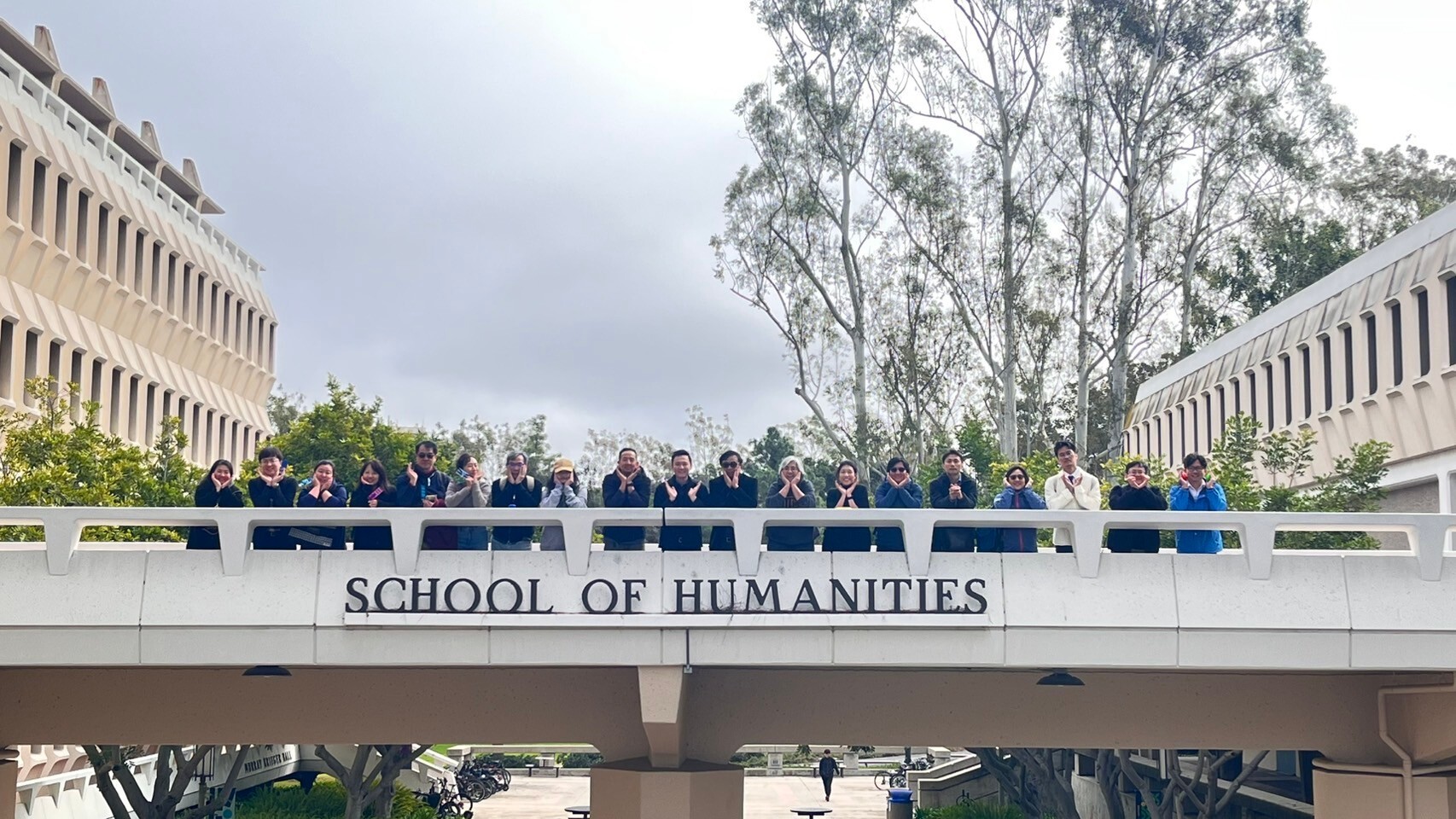
All Taiwan Tech participants took a photo with UC Irvine College of Humanities Associate Dean Yong Chen (right 9), Director of Global Languages & Cultures Jerry Lee (left 9), and Associate Director Rong-Hsian Lin (left 7).
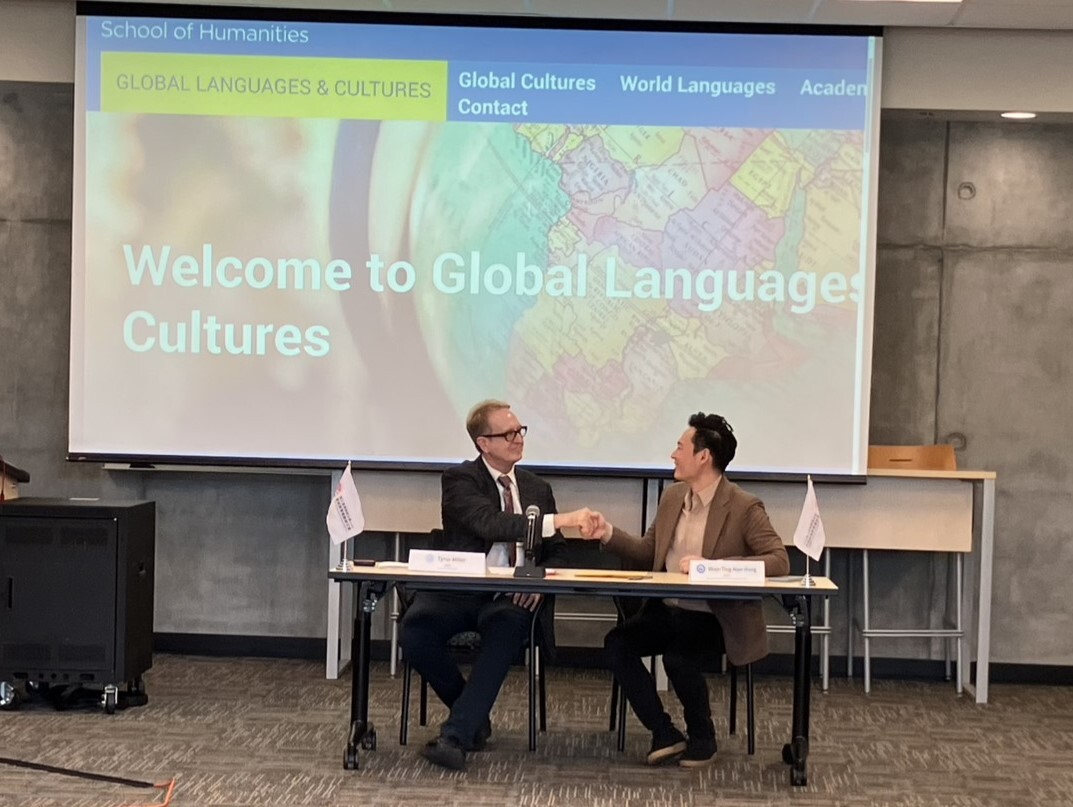
Dean of College of Liberal Arts and Social Sciences from Taiwan Tech Dean and Director of Office of Bilingual Education Initiatives Shao-Ting Hung and Dean of UC Irvine College of Humanities Tyrus Miller jointly sign a memorandum of understanding.
Taiwan Tech and UC Irvine are both committed to promoting diversity and bilingual education. After a year and a half of negotiations, Director of Taiwan Tceh Bilingual Education Office and Dean of the College of Liberal Arts and Social Sciences, Shao-Ting Hung, and Dean of UC Irvine College of Humanities Tyrus Miller officially signed a cooperation agreement. One of the key drivers behind this collaboration, UC Irvine College of Humanities Professor Rong-Hsian Lin, stated, “One of the key concepts emphasized in EMI courses is that students should be Knowledge Contributors. Teachers and students from different backgrounds collaborate to construct the learning process, creating an inclusive learning environment”. This was the core message UC Irvine intended to convey to all participating teachers during the training.
During the training, UC Irvine offered 13 courses covering fields such as engineering, management, physics, chemistry, biology, and biomedical sciences, providing participants with opportunities to observe and learn. The instructors have all completed UC Irvine’s Active Learning training and received certification. Some of them have even won international teaching and academic awards, such as being named one of Poets & Quants’ Top 40 Under 40 Business Professors or receiving the Pedagogical Innovation and Development Award for Teaching Excellence. In addition, UC Irvine organized seven diverse workshops, exploring topics such as English-medium instruction, speaking and writing skills, and active learning. The workshops also incorporated AI-assisted teaching tools and virtual reality (VR), which have become popular among university teachers in recent years, further enhancing the practical value of the training.
Ying Wang, Assistant Professor at Taiwan Tech’s General Education Center and leader of the training group, shared her deep appreciation for how UC Irvine employs diverse teaching methods to guide students in integrated and active learning. For example, in an engineering writing course, the instructor did not completely forbid students from using AI but instead trained them to use AI tools to search for debate points, teaching students how to use the tools correctly. Through repeated questioning, the instructor encouraged students to think critically, saying, “AI tools also have limitations. What we can do is to maintain a level of skepticism and critically evaluate the answers provided by AI tools. This approach has given me a deeper understanding of the diversity in teaching”.

Training participants discuss with Engineering Writing instructor Patrick Hong how to guide students in critical thinking through instructional design.
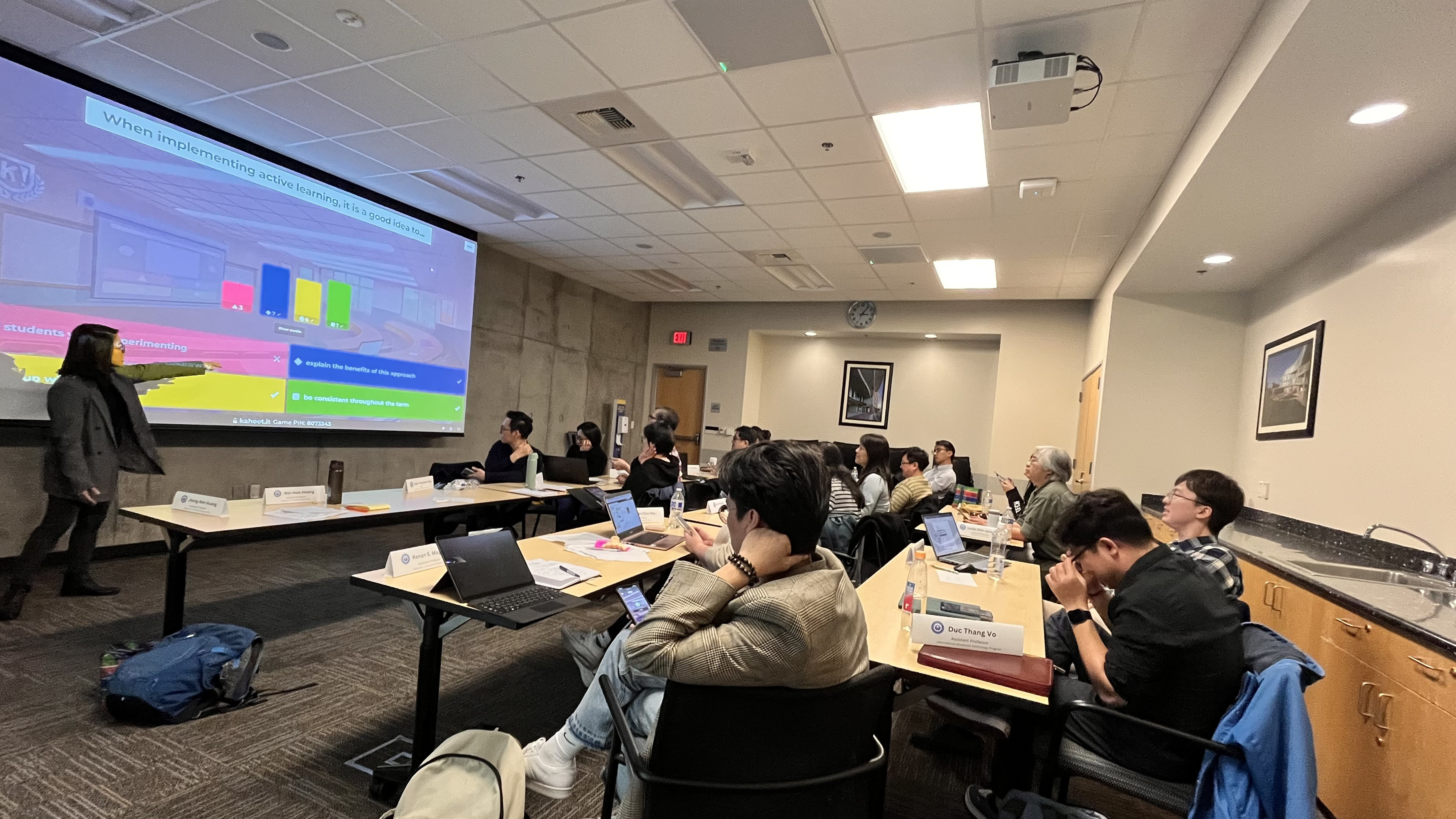
Training teachers actively experience the course design and teaching steps that Cathy Vimuttinan uses to guide students in active learning during the workshop.
Assistant Professor Wei-Hsin Hsiang from the School of Management and Associate Professor Tzu-Chen Tang from the College of Applied Sciences pointed out that active learning is not just about student participation in classroom activities; it is about encouraging students to demonstrate initiative and enthusiasm throughout the process, deepening their understanding and application of knowledge. “In this process, the role of the teacher shifts from a mere knowledge transmitter to a learning guide, requiring effective instructional design and methods to inspire active student participation”.
According to data from the 112th School Affairs Information Public Platform, Taiwan Tech students come from over 50 countries and regions, with international students comprising about 10% of the total student population, and overseas full-time faculty making up 9%. UC Irvine also has a diverse student body, with approximately 18% from Mandarin-speaking backgrounds, 25% from Latin America, and students from various parts of Asia and Europe. UC Irvine College of Humanities Associate Dean Yong Chen pointed out that UC Irvine is a Minority Serving Institution (MSI) certified by the U.S. Department of Education, particularly focusing on students' diverse backgrounds. The university even supports teaching operations that reflect its rich ethnic diversity through a fixed percentage of institutional funding and offers a variety of language and cultural courses.
The Taiwan Tech participants in the training come from countries including Vietnam, the Philippines, and Taiwan, while half of the UC Irvine instructors are non-native English speakers, including scholars of Indian, Chinese, Korean, and Japanese descent. This multicultural background provided the teachers with richer learning and exchange opportunities.
With the growing trend of EMI (English-Medium Instruction) in Taiwan, bilingual programs at major universities are no longer solely focused on how to teach in English but are increasingly emphasizing improving the quality of EMI courses, enriching teachers' instructional skills, and enhancing students' English proficiency. Promoting diverse learning of disciplinary knowledge and helping faculty and students connect with industry and international standards underscores the importance of advancing bilingual education.
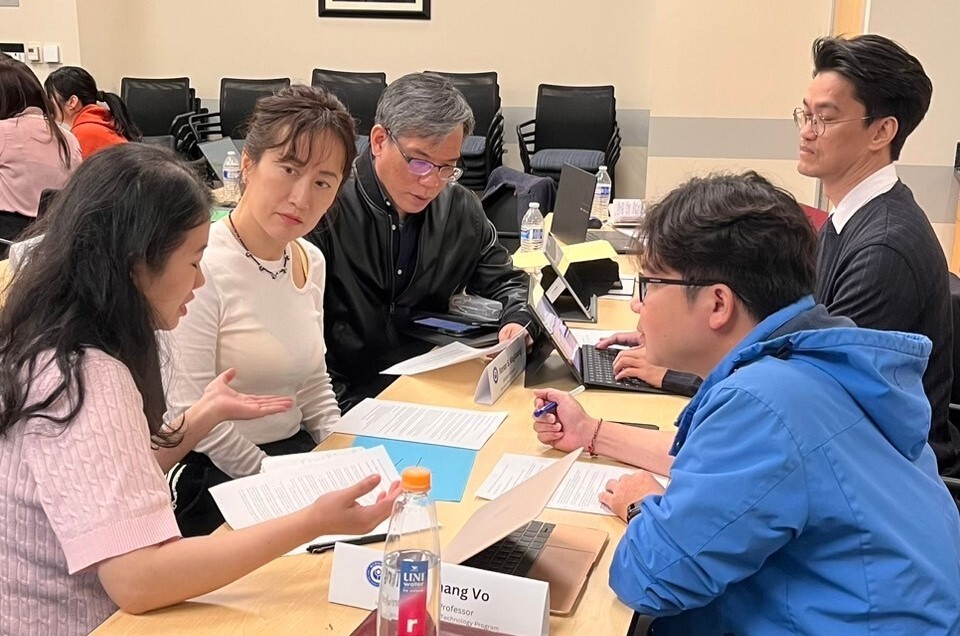
Training participants from various backgrounds at Taiwan Tech exchanged ideas on how to apply Universal Design for Learning (UDL) in their respective fields during the “Inclusive Teaching” workshop led by Professor Rong-Hsian Lin from UC Irvine's College of Humanities.