Taiwan Tech expands global learning opportunities, empowering students through industry-linked experiences in the US, Germany and Australia.
To nurture talent with a global perspective and interdisciplinary capabilities, Taiwan Tech has continued in recent years to promote overseas exchange programmes, short-term study visits, international internships, and research programmes. These initiatives encourage students to step beyond familiar learning environments and gain first-hand exposure to academic research and industrial development in different countries. In recent years, Taiwan Tech students have travelled to destinations including the United States, Germany, and Australia. Through diverse overseas learning experiences, ranging from materials research and corporate internships to sports technology, they have strengthened their professional competencies while developing global mobility through cross-cultural exchanges.
Li-Wei Liang, a student in the Department of Materials Science and Engineering, travelled to the United States to participate in the MACHI Program, a short-term research internship programme at Rice University. She became the first Taiwan Tech student to participate in this programme. The MACHI Program selects 20 female STEM (Science, Technology, Engineering, and Mathematics) students from Taiwan and Japan and provides opportunities for international research internships, academic workshops, and cultural exchanges. The programme aims to encourage female students to pursue research and professional development in science and engineering.
During the programme, Liang joined the Two-Dimensional Materials Research Laboratory at Rice University, where she worked alongside professors and doctoral researchers on materials growth, measurement, and research discussions, gaining first-hand experience in an international research environment. Reflecting on the experience, she shared, "I used to think that my academic performance and English proficiency were not among the best. However, this experience made me realise that as long as I am willing to take the first step, the world offers far more possibilities than I could have imagined."
Towards the end of the five-week programme, Liang delivered a research poster presentation entirely in English and won third place in the competition. She was also the only participant from Taiwan among the top three winners. She noted that this achievement was more than simply recognition of her ranking; "More importantly, it made me truly believe that I am fully capable of conducting advanced academic research and engaging in academic exchanges in an international environment."
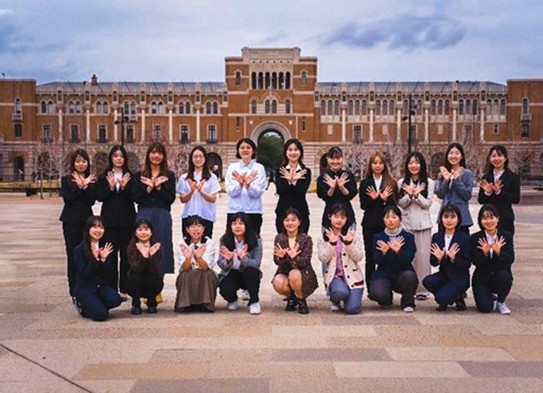
Li-Wei Liang (front row, third from the left) participated in the MACHI Program, which featured international research internships, academic workshops, and cultural exchanges. The photograph shows all programme participants posing in front of Rice University.
In addition to research exchanges in the United States, Taiwan Tech has continued to encourage students to participate in Germany's Saxon International Internship Program (SiiP). Over the past two years, nine Taiwan Tech students have travelled to Germany to undertake internships at leading local companies and research institutions. Their fields of placement have included artificial intelligence, semiconductors, environmental sustainability, engineering technology, and cross-cultural marketing. These opportunities allow students to gain practical insights into European industrial operations and better align their professional capabilities with international industrial supply chains.
During his internship at Intap Network in Germany, Cheng-Chun Wu, a student in the Bachelor's Programme in Management, participated in various company projects and collaborated with colleagues, earning strong recognition from the company. Janett, a manager at Intap Network, commented, "Through the SiiP programme, we welcomed a highly enthusiastic and capable intern from Taiwan. He quickly adapted to our team workflows and brought fresh perspectives. His professional abilities and interactions with the team generated significant positive benefits for both our company and our clients." Following the completion of his internship, the company even invited Wu to remain as a student assistant, allowing his overseas internship experience to extend beyond short-term learning into continued professional experience.
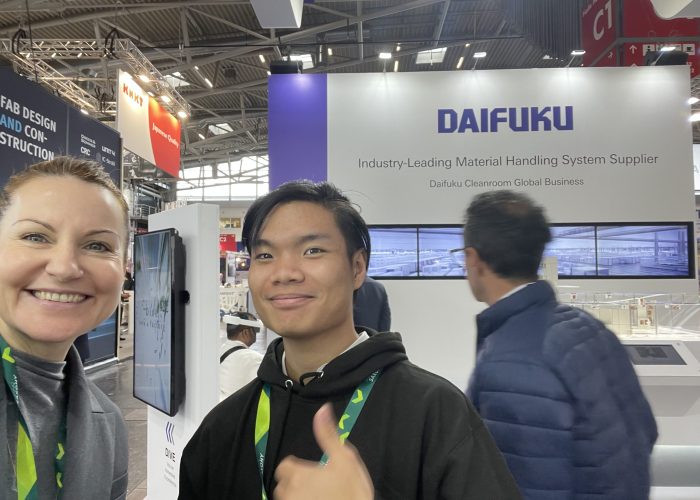
Cheng-Chun Wu, a student in the Bachelor's Programme in Management, undertook an internship at Intap Network in Germany, where his contributions to company projects earned strong recognition from his supervisors.
This year, Taiwan Tech further expanded into a new field by organising its first-ever Overseas Sports Technology Study Tour to Australia. Led by Professor Wei-Chun Hsu , Director of the Centre for Sports Science and Research Protection, and Assistant Professor Yi-Jia Lin of the Graduate Institute of Artificial Intelligence Cross-Disciplinary Technology, the delegation travelled to Australia to attend The International Talent Identification and Development Conference 2026, organised by the Australian Institute of Sport (AIS). The group also visited several academic and research institutions, including the AIS, the University of Sydney, and the University of Wollongong.
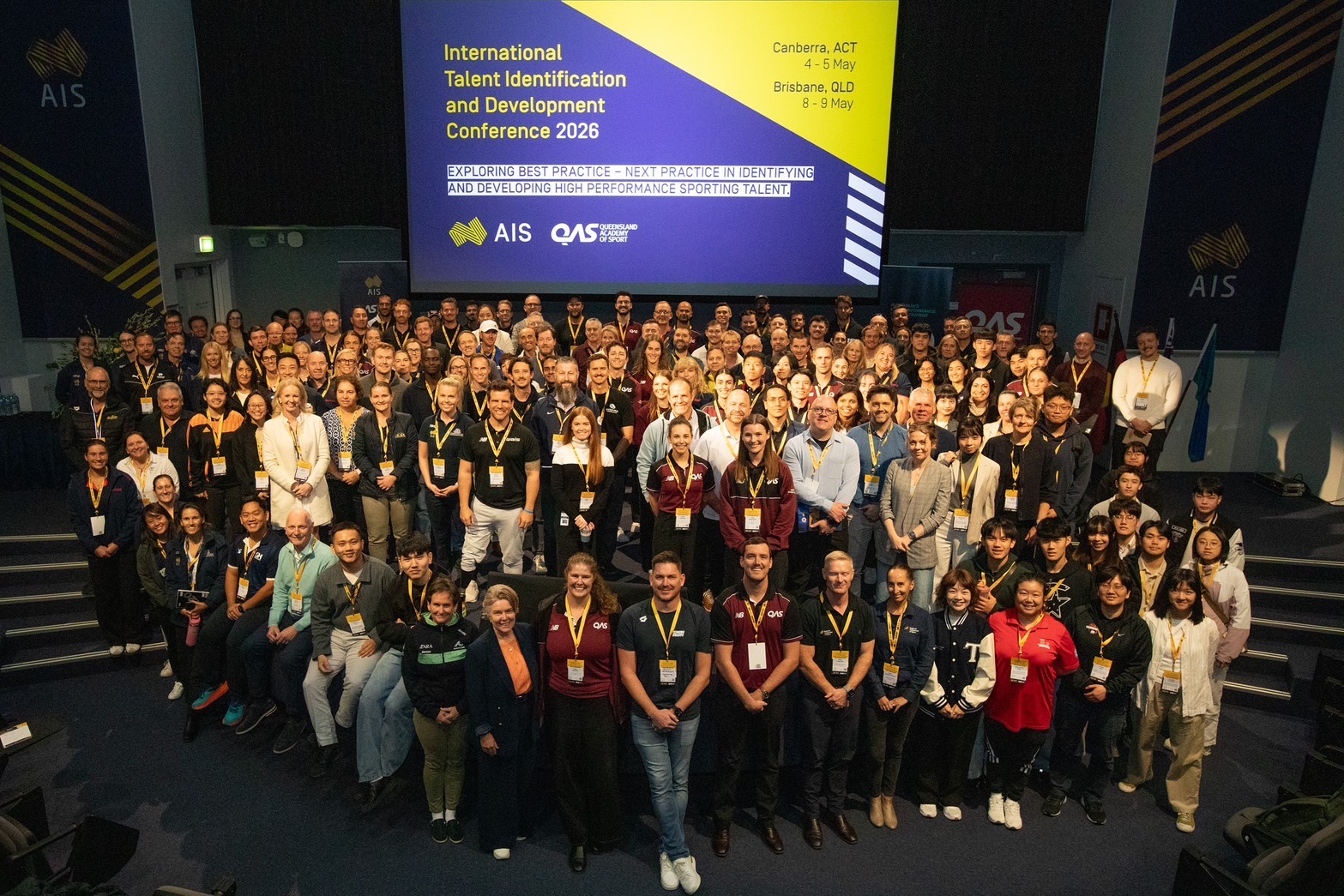
Professor Wei-Chun Hsu (first row, third from the right), Director of the Centre for Sports Science and Research Protection, and Assistant Professor Yi-Jia Lin (first row, second from the right) led the sports technology study tour delegation to Australia to attend the international conference.
In addition to participating in the international conference, Taiwan Tech faculty members and students gained first-hand insights into sports science laboratories, high-performance training facilities, sports data analysis spaces, and the manufacturing processes for customised equipment for athletes. From the perspectives of technology, engineering, and sports science, they observed how Australia applies data analytics and precision medicine to support athletic training, enhance athletes' performance, and promote their long-term development.
For Chan-Cheng Lin, a student in the Department of Electrical Engineering and a member of the Taiwan Tech varsity basketball team, the trip to Australia was not only an overseas study experience but also his first visit to a destination outside Asia. It provided him with a new perspective on sports technology. Although attending intensive English-language presentations over several consecutive days was mentally demanding, he found the experience extremely rewarding. "Even when I could not fully grasp certain content during the presentations, I was able to gradually understand the speakers' key concepts by conducting further research and organising my notes afterwards. This journey greatly boosted my professional knowledge and confidence in using English!" He was also deeply impressed by the open and natural communication style of Australian academics. "Their culture of proactively sharing ideas and respecting diverse perspectives is truly worth learning from."
Jung-Ti Chang, a student in the Graduate Institute of Biomedical Engineering, gained a new vision of international high-performance sports systems through the integration of sports science and engineering. He observed, "In Taiwan, sports are often regarded as a hobby; in Australia, however, I saw how sports are approached with an extremely rigorous scientific mindset and accorded the highest level of professional respect." He was particularly impressed by the customised equipment developed by the AIS for Paralympic athletes, as well as the application of technologies such as 3D printing. These experiences prompted him to further explore the integration of biomedical engineering and sports technology and strengthened his determination to pursue a future career in biomedical engineering and sports technology.
Ying-Jung Yeh, Dean of International Affairs at Taiwan Tech, emphasised that short-term overseas study programmes offer far more than improvements in language proficiency. They also comprehensively inspire students' enthusiasm for independent learning and help them develop cross-cultural communication skills, international teamwork capabilities, and global mobility. By gaining first-hand exposure to world-class academic institutions, research centres, and corporate environments, students can experience the educational systems and industrial developments of different countries, broaden their global perspectives, and gain a clearer understanding of their future career paths.
Taiwan Tech will continue to expand its international exchange opportunities. In the second half of 2026, the university will progressively select and send students to Japan, Germany, the Czech Republic, and other destinations, offering diverse overseas learning opportunities, including exchange programmes, study visits, and research placements. Through these experiences, students can accumulate knowledge and practical experience in different international settings, extending their professional learning into cross-cultural engagement. Taiwan Tech encourages more young students to step confidently onto the international stage and shine on the global platform.