Taiwan Tech enriches arts education with dance performance blending dance and visual arts.
On 3 October, the Center for General Education at Taiwan Tech invited MAD Theater to present “Dance and Art: From Canvas to Stage”. The performance transformed artistic styles from art history into dance, body movements, and stage visuals, offering faculty members and students new perspectives on art. In addition to professional dance performances, the event featured interactive sessions that invited students onto the stage to explore physical expression and improvisation under the guidance of the dancers. Rather than simply sitting in the audience and watching, students were encouraged to participate firsthand and experience the possibilities of bringing different art forms together.
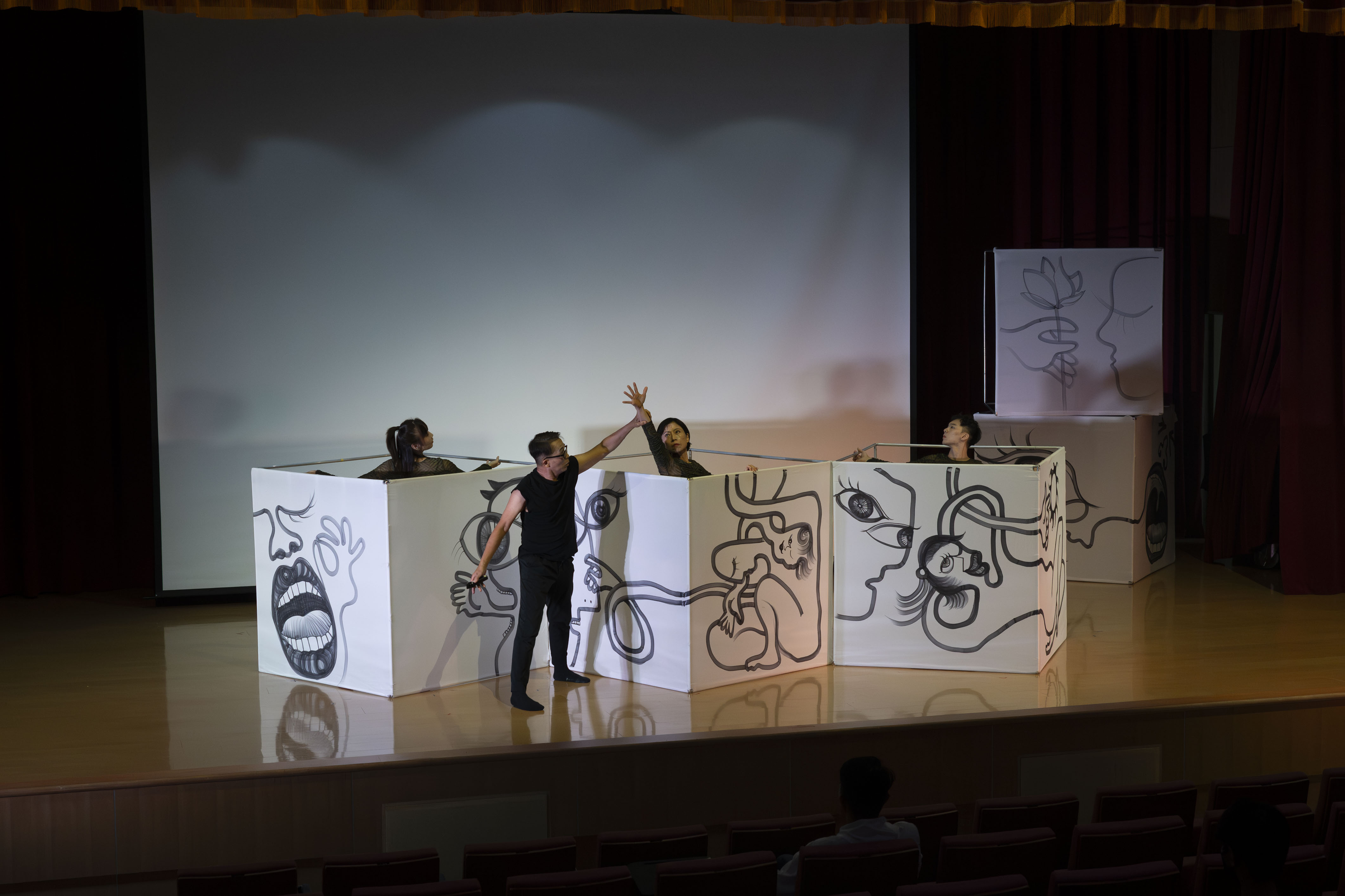
An excerpt from “Dance Cubism” combines picture frames, hand-drawn elements, and dancers’ movements to create rich layers of visual perspectives.
Founded in 1997, MAD Theater is led by Artistic Director Chi-Chih Shih, whose background is in fine arts and painting. The company has long explored interdisciplinary creative forms by combining painting, installation art, and dance. The “Dance and Art” series draws inspiration from different artistic styles throughout art history, transforming the colours, lines, shapes, and imagination found in paintings into the dancers’ physical language. Through stage settings and visual design, the performances reinterpret artworks that were originally static.
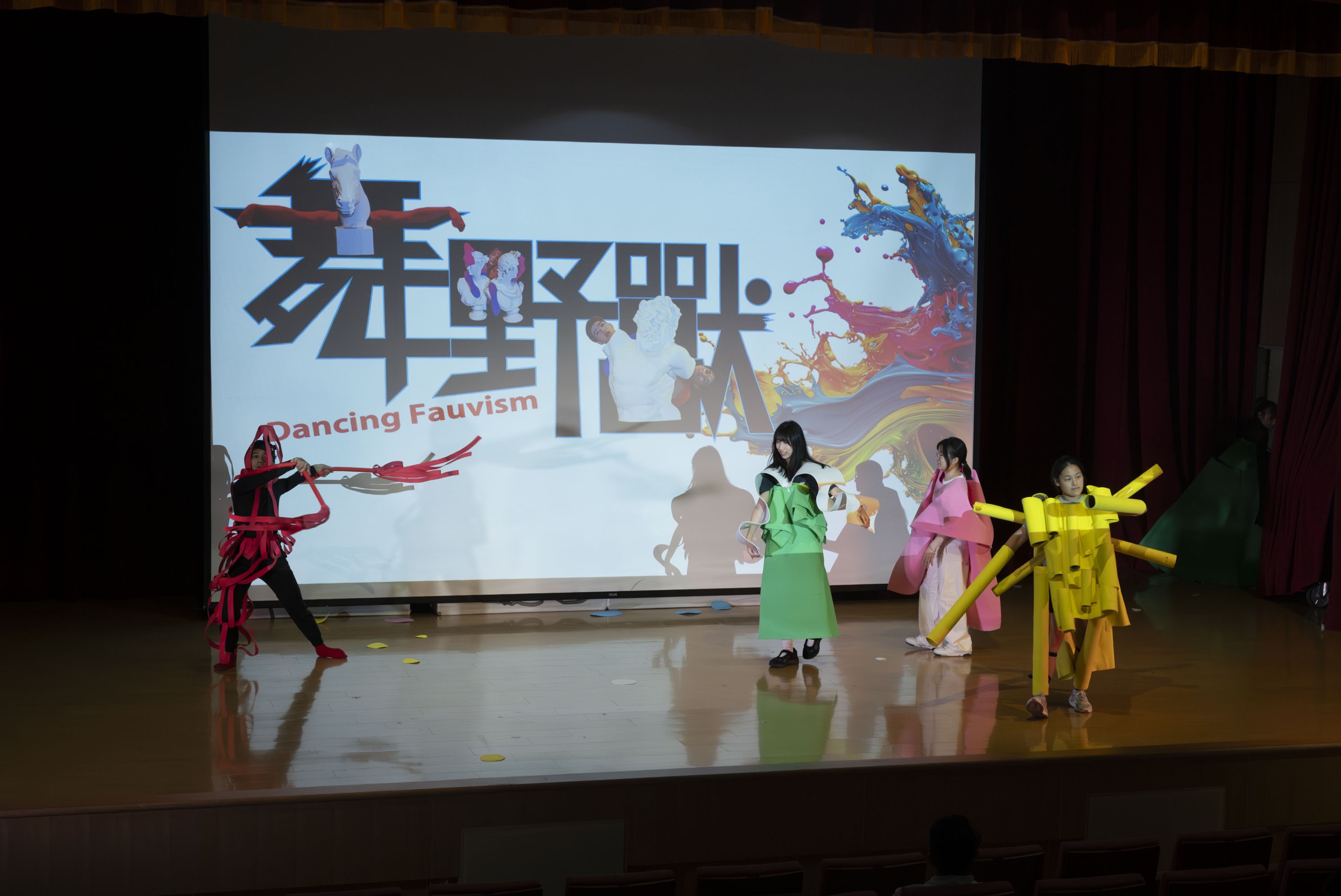
For its Taiwan Tech performance, the company selected three works: “Dance Cubism”, “Dance Fauvism”, and “Dance Surrealism”. Together, they explored the dialogue between different artistic styles and forms of dance expression. “Dance Cubism” incorporates picture frames, hand-drawn elements, and dancers’ movements. Through multiple perspectives and spatial arrangements, it presents the visual characteristics of Cubist art. “Dance Fauvism” uses vivid colours and expressive body movements to create an intense stage atmosphere, reflecting Fauvism’s bold use of colour. “Dance Surrealism”, meanwhile, draws on dreams and imagination, using distorted body movements and fantastical stage imagery. Through distinct dance vocabularies, the three works reinterpret different artistic styles. They invite faculty members and students not only to appreciate the performances visually but also to reflect on how different media can communicate diverse creative perspectives.
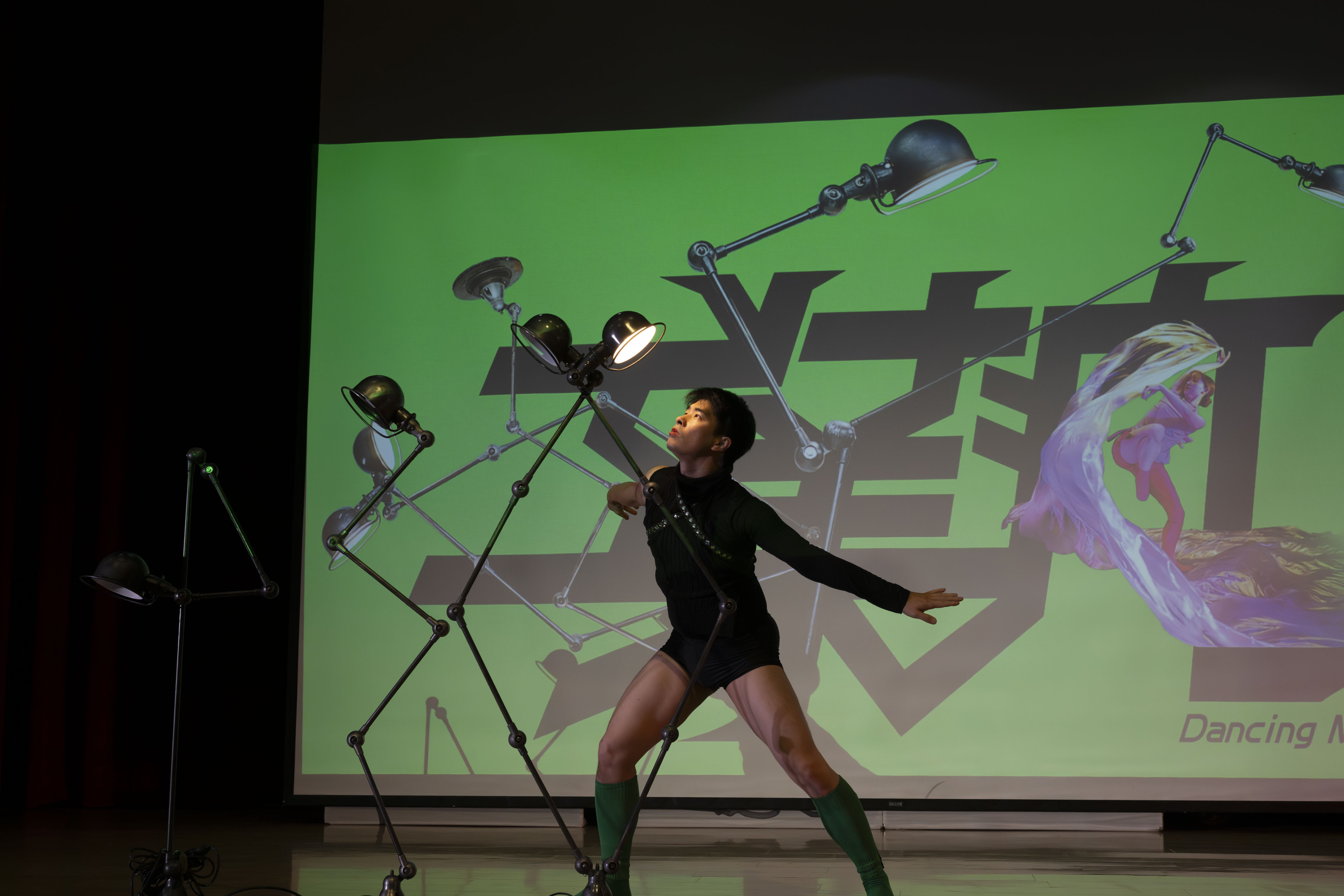
An excerpt from “Industrial Madness” showcases the dynamic stage impact created by the interplay of dance, lighting, and sound.
Beyond the dance performances, the event transformed the stage into an open creative space, inviting students to leave their seats and follow the dancers in exploring the relationship between the body and space through simple movements. Faced with improvisation without a fixed script, students were initially somewhat hesitant. However, with the dancers’ guidance, they gradually became more relaxed and began responding to the rhythm of the music and the situations unfolding around them. In one interactive session, students were invited to wear dance costumes and join the dancers in an improvised performance. This experience transformed students from spectators into active participants. Each person's movements and spontaneous responses became a unique part of the performance, allowing everyone to discover that artistic creation does not necessarily have a single correct answer. Instead, different forms of expression can emerge through physical exploration and interaction with others.
Students from the audience put on dance costumes and follow the dancers in performing simple improvised movements, experiencing the creative appeal of dance.
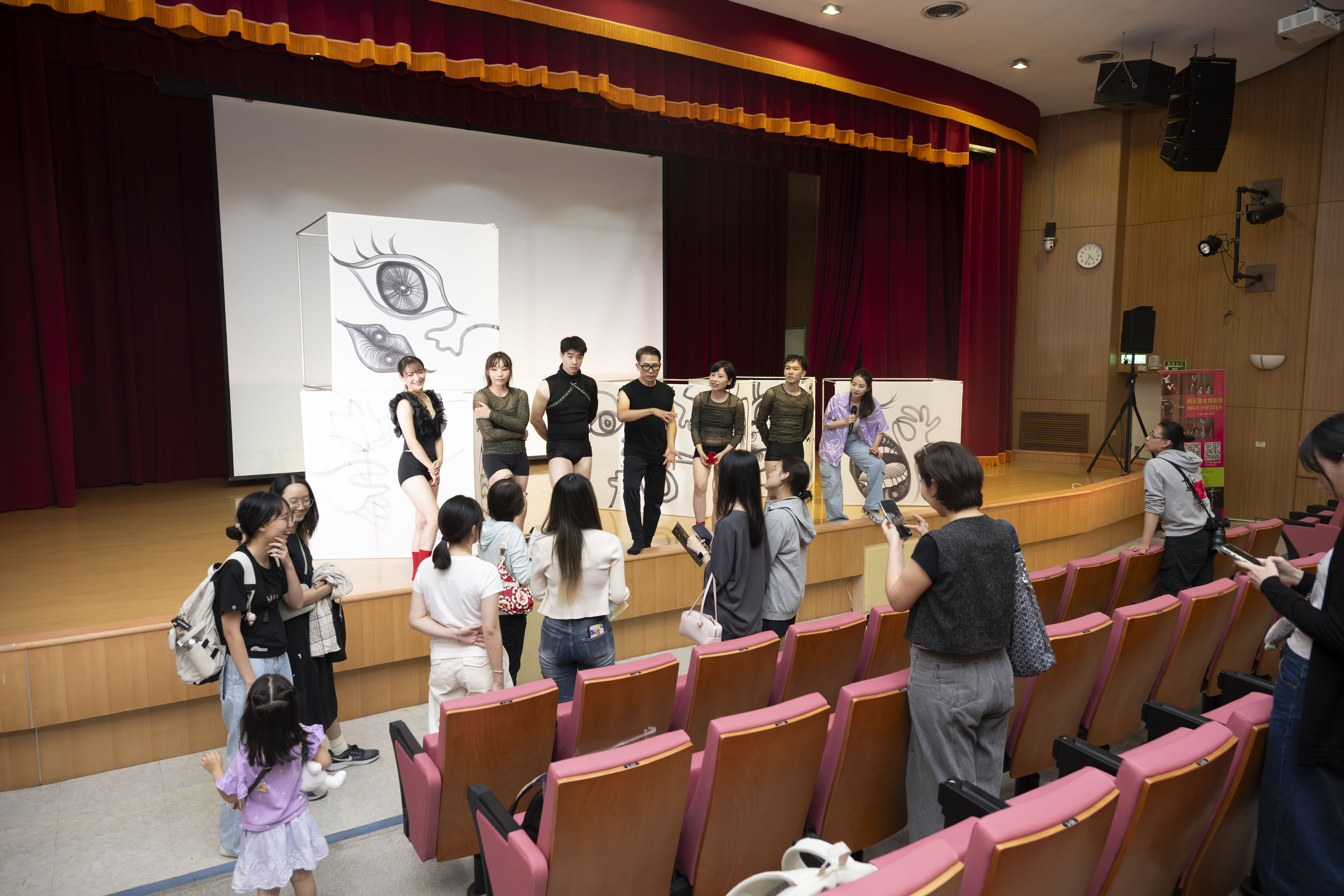
The dancers interact and exchange with audience members after the performance.
Mei-Fang Shih, Head of the Humanities and Arts Section at the Center for General Education, said that the dance performances had made a powerful visual impact on faculty members and students. By bringing dance and fine arts together across disciplines, the event presented fresh forms of conceptual expression. The three works also offered an avant-garde and memorable aesthetic experience. She added that the Center hopes to use a wide range of arts activities to expose students to different cultures and creative perspectives, broaden the ways in which they experience and understand art, and enrich the humanities and artistic appreciation of the Taiwan Tech community.
In addition to works from the Dance and Art series, MAD Theater also performed an excerpt from “Industrial Madness”. Co-created by Taiwanese and Spanish artists, the work brings together different cultural backgrounds and creative approaches. It incorporates familiar elements from everyday life, such as electricity, light, and wind, transforming them into stage installations and combining them with the dancers’ physical language to create a performance with a distinctive visual style. Starting from elements familiar in daily life, the work encourages audiences to reconsider the relationship between industry and modern living, as well as how the environment and technology shape everyday experiences. It also demonstrates how artists can transform observations of ordinary life into stage creations.
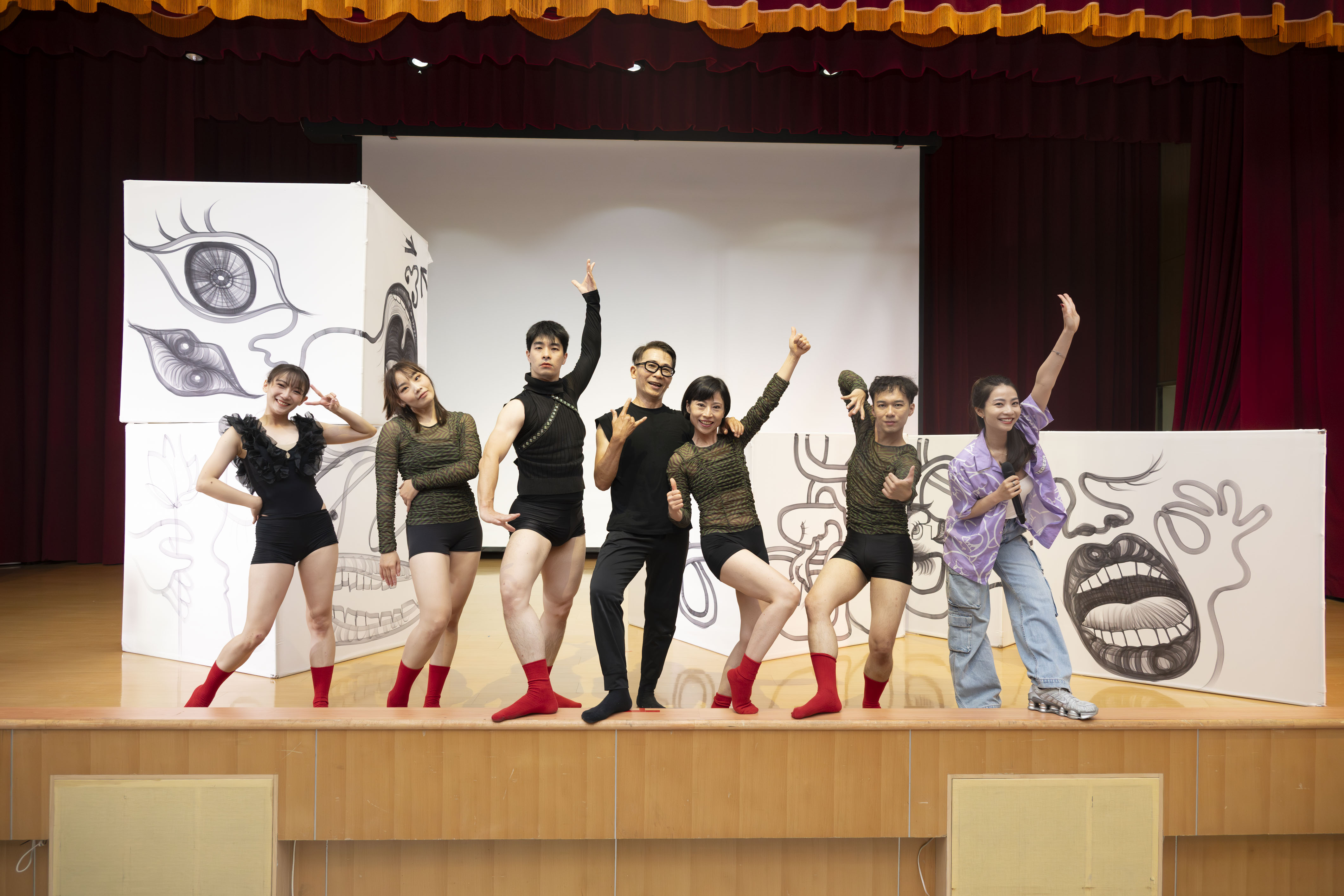
Artistic Director Chi-Chih Shih (centre) of MAD Theater poses with the dancers.
The Center for General Education continues to organise a diverse range of arts and cultural activities, providing faculty members and students with opportunities to experience different art forms. By combining dance performances, stage installations, and live audience participation, “Dance and Art: From Canvas to Stage” enabled students to move beyond appreciating finished works and become involved in the creative process, exploring the relationships between the body, space, and art through firsthand experience. Through interdisciplinary artistic experiences, Taiwan Tech hopes to broaden students’ aesthetic perspectives, integrate the humanities and arts into campus learning and everyday life, and develop their ability to appreciate artistic beauty and understand diverse perspectives.
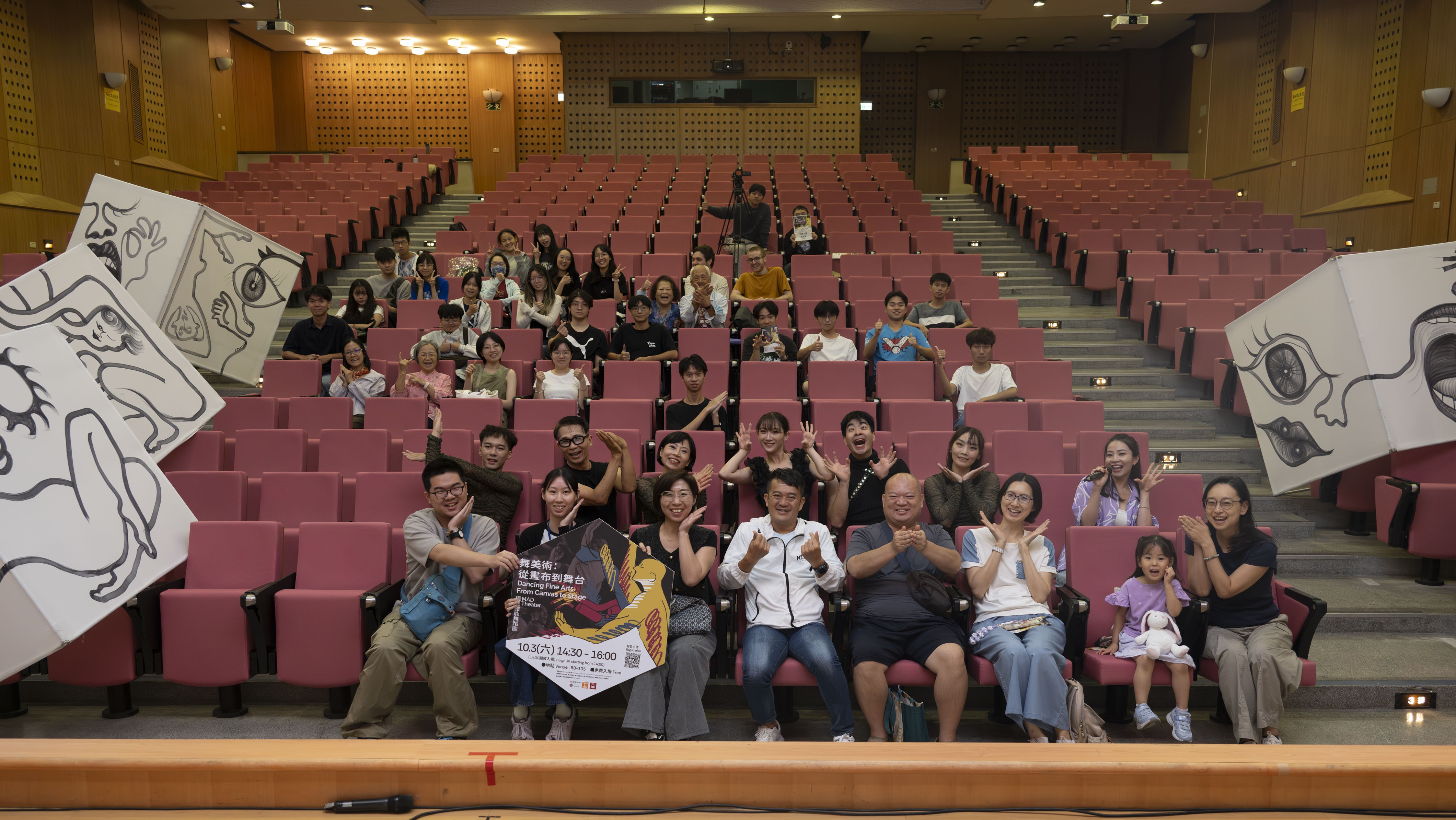
The dancers took a group photo with audience members. Mei-Fang Shih, Head of the Humanities and Arts Section at the Center for General Education, is third from the left in the front row.