Taiwan Tech advances AI Pulse Health Screening, enabling 25-in-1 risk assessment from chronic diseases to dementia.
Professor Hsin Hsiu of the Graduate Institute of Bioedical Engineering at Taiwan Tech has long been dedicated to research on AI-based pulse wave detection wearable devices and biomedical electronics technology. After receiving the National Innovation Award in 2023 for a project on COVID-19 vaccine adverse effect detection and warning, his team continued to deepen its technology and AI analysis, gradually expanding the original 12 analytical indicators to 25, covering a wide range of chronic diseases and cancer risk assessments. They established an integrated health evaluation platform and, with their project titled “An AI Pulse Wave Wearable Device for Assisting the Assessment of Vascular Health and Chronic Disease Risk”, once again received the 22nd National Innovation Award in the Academic Research Innovation category.
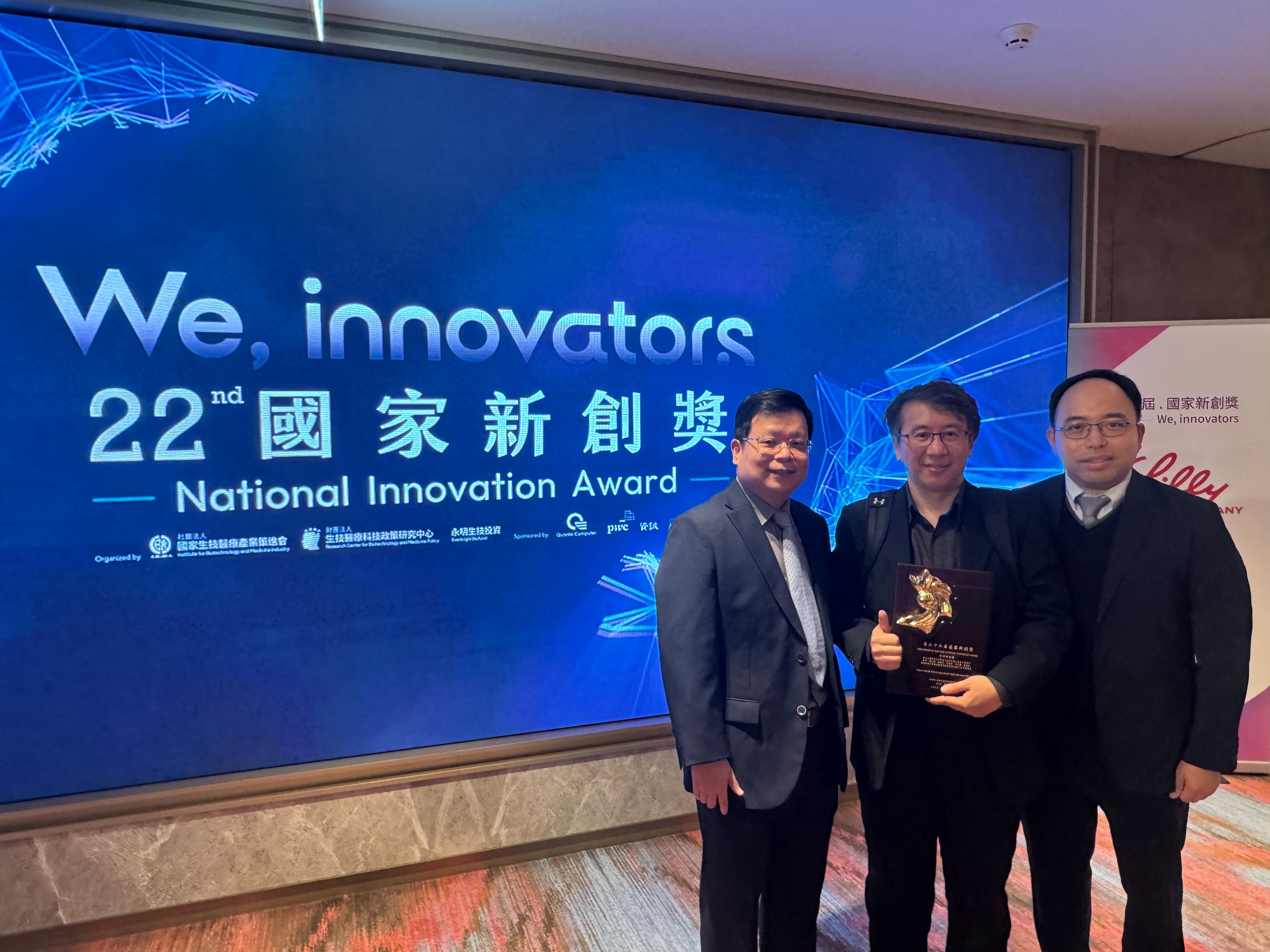
Professor Hsin Hsiu of the Graduate Institute of Bioedical Engineering at Taiwan Tech once again received the 22nd National Innovation Award (Academic Research Innovation category) for the project “An AI Pulse Wave Wearable Device for Assisting the Assessment of Vascular Health and Chronic Disease Risk”. From left to right: Superintendent Hsiao-Feng Hu of Tri-Service General Hospital Penghu Branch, Professor Hsin Hsiu, and Director Li-Wei Wu of the Division of Geriatrics at Tri-Service General Hospital.
Professor Hsin Hsiu pointed out that in the face of continuously rising global medical and health insurance costs, early detection and early treatment are key to reducing the overall burden of care. Therefore, through an AI pulse wave test completed within one minute using a bracelet or ring device, the team assists physicians and the public in quickly identifying the health risks that require the most urgent attention amid complex physiological conditions. At the same time, they established a health assessment model based on the concept of “point, line, and plane”: from a single disease (point), to systemic disease progression (line), to the overall health status of the human body (plane), enabling the wearable device to function not merely as a measurement tool, but as an intelligent health support system with clinical significance.
Accordingly, the team continues to expand application scenarios in two major directions - “early-stage detection” and “integration into daily life.” For the elderly population, the system incorporates assessments for cognitive health, sarcopenia, anemia, and dialysis-related conditions, assisting in early intervention and treatment. For young and middle-aged adults who shoulder family and work responsibilities, the focus is on risk warnings for vascular health, metabolic diseases, kidney function, and breast cancer, thereby reducing the impact of sudden health issues on individuals and families.
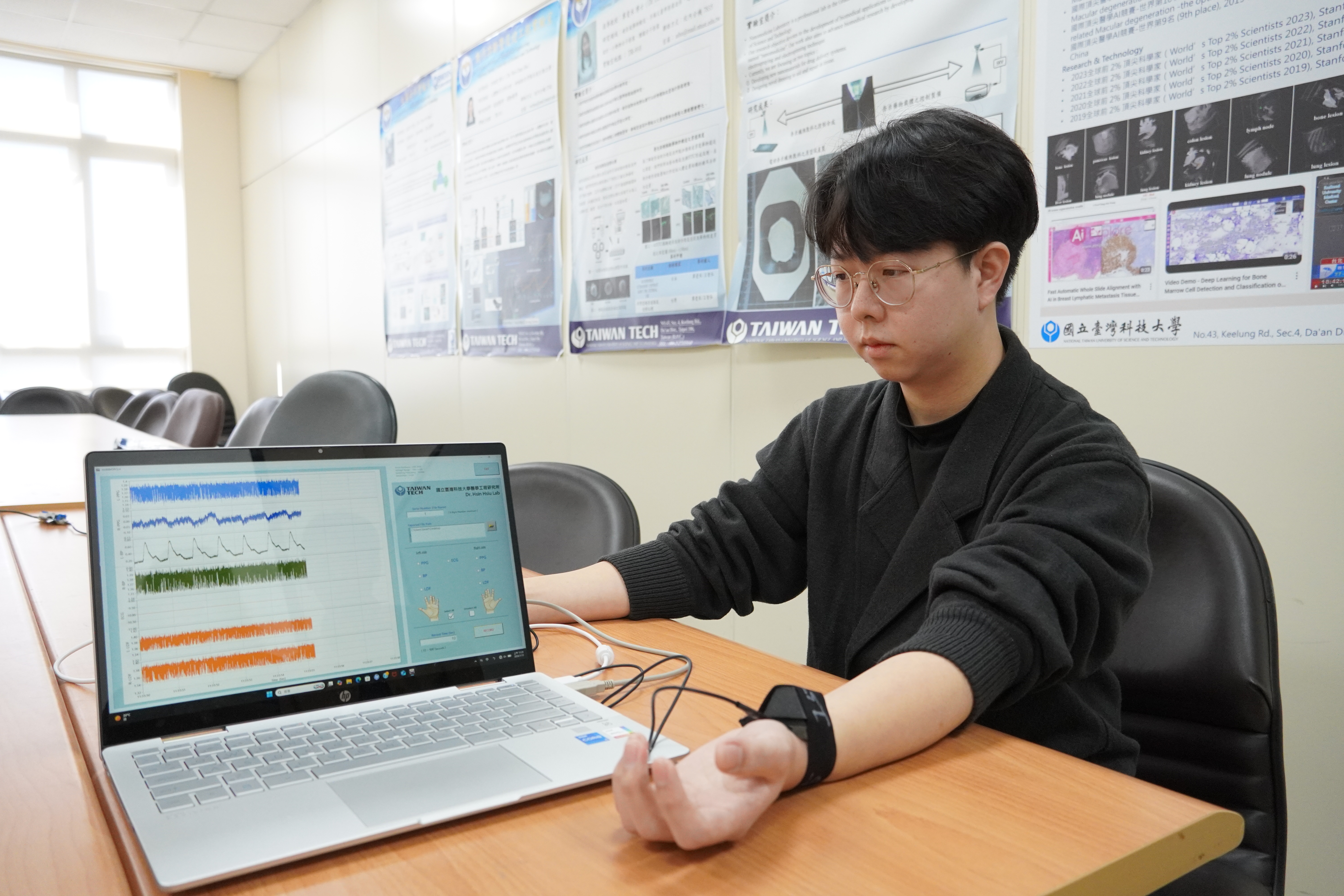
Through a bracelet device, the team completes AI pulse wave testing within one minute, helping physicians and the public quickly identify the health risks that require priority attention in complex physiological conditions.
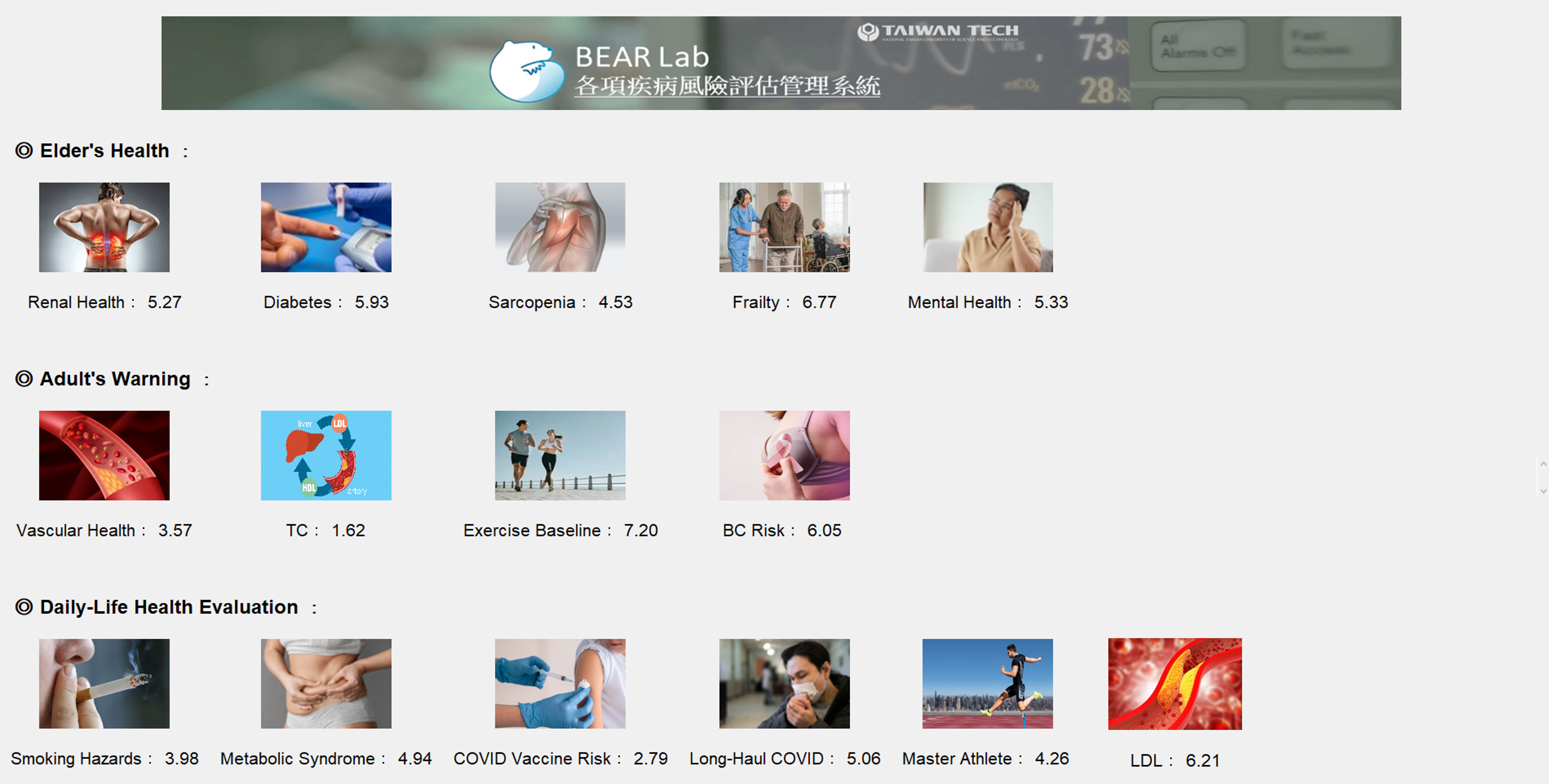
The online risk assessment management system integrates the wearable device to instantly generate graphical reports, using a 0–10 scale as the evaluation index; the higher the score, the higher the risk. This assists users in quickly grasping key risk factors and enables more precise alignment of subsequent treatments.
As the population continues to age, cognitive decline-related diseases are placing increasing pressure on long-term care systems. The team has therefore introduced an early warning assessment model for mild cognitive impairment (MCI) in older adults, with the hope of detecting potential risks of Alzheimer’s disease and other forms of dementia at an early stage. In addition, health assessments have been further extended into daily life by integrating indicators such as exercise habits, dietary patterns, and vascular nutrition to establish an AI-assisted evaluation model that provides concrete and actionable improvement recommendations, gradually building a comprehensive detection system for cardiometabolic health and early cognitive wellness.
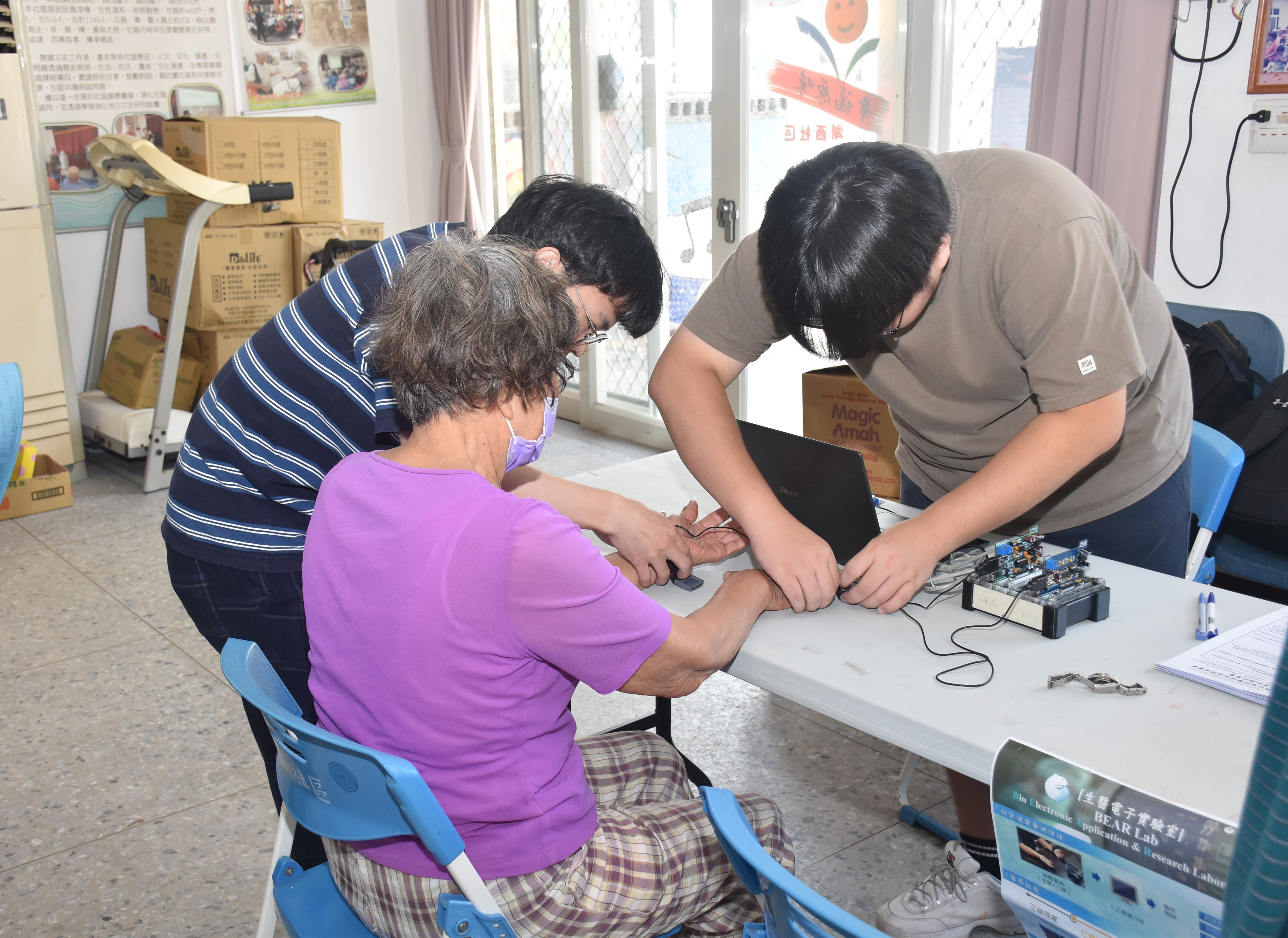
The device’s overall manufacturing and operational costs are relatively low, making it particularly suitable for community health screenings, rural and remote medical services, and long-term care settings, helping individuals receive early warnings in the initial stages of disease. The image shows the team conducting cognitive and vascular assessments for older adults at a health screening site in Huxi Township, Penghu.
Early-stage breast cancer risk detection and prognosis evaluation have also become one of the research topics the team has explored in recent years. Professor Hsin Hsiu explained that in the early stages of cancer development, angiogenesis occurs, while later metastasis may alter the properties of vascular endothelial cells; these changes may be reflected in characteristics of pulse wave transmission. Therefore, the research team is currently collaborating with Taipei City Hospital Renai Branch to collect and conduct preliminary analyses of relevant pulse wave data, observing differences produced by various indicators as a foundation for future risk warning and quality-of-life monitoring research.
On the hardware side, the team has launched BEARLab 2.0, moving toward mass production while balancing aesthetics, convenience, and reliability. On the software side, development is progressing toward cloud-based and one-click analysis, incorporating a unique waveform quality screening mechanism to integrate analysis and results into a single workflow and instantly generate a 25-in-1 graphical report. This allows users to quickly grasp key risks and enables more precise medical decision-making and subsequent treatment alignment. The operational framework has been established and preliminary testing completed, and future plans include strengthening cybersecurity and server infrastructure to gradually connect with industry partners.
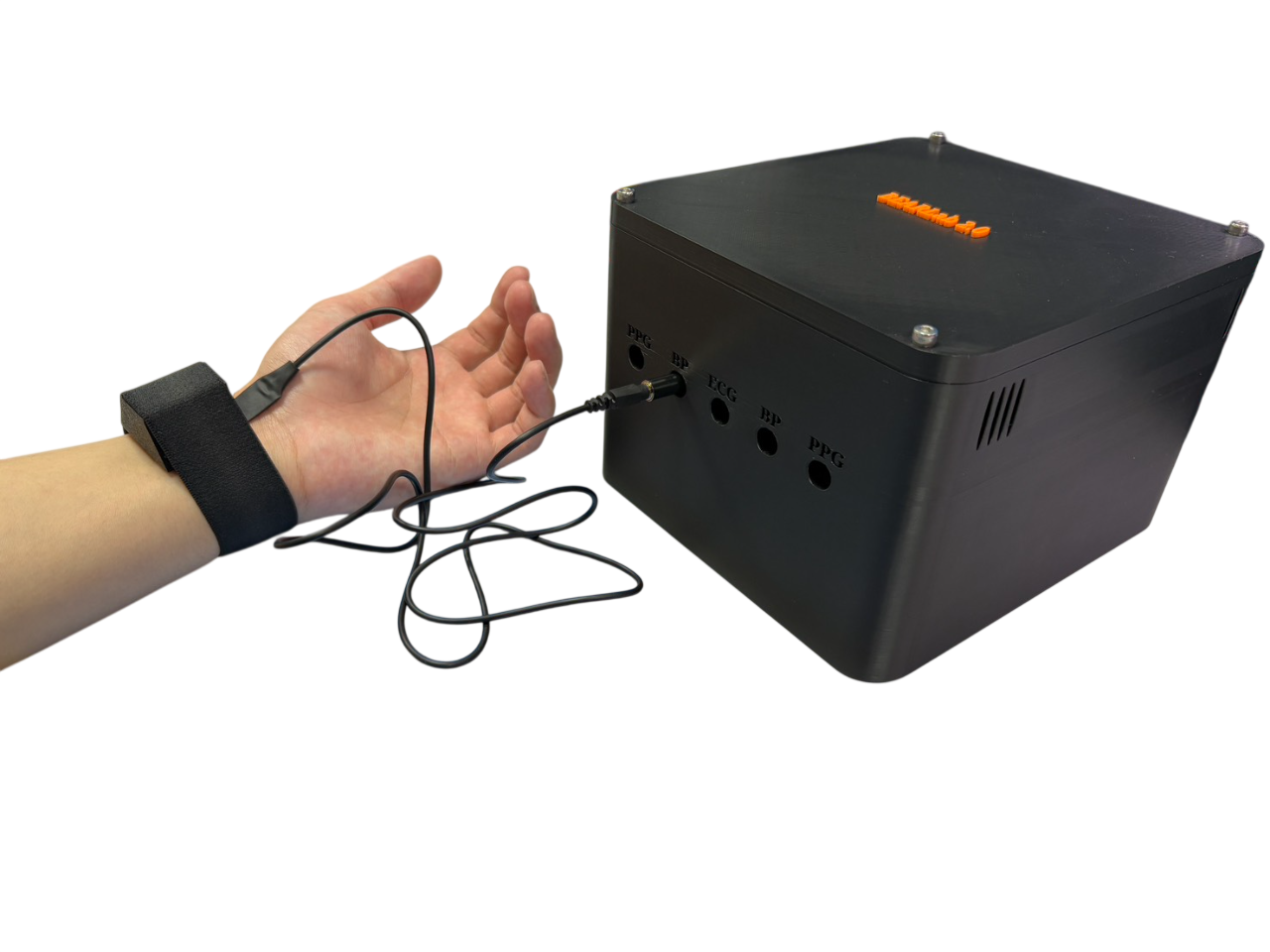
On the hardware side, the team has launched BEARLab 2.0, balancing aesthetics, convenience, and reliability.
The AI pulse wave detection wearable device has achieved accuracy rates ranging from 71% to 92% in risk prediction for multiple chronic diseases, dementia, and kidney disease. In the future, the team will further develop comprehensive evaluations for cardiometabolic health, cognitive health, and cancer treatment efficacy, integrating lifestyle analyses such as diet and exercise to strengthen early warning and health promotion applications. Professor Hsin Hsu shared, “My previous dream was to complete 100 health risk assessments before retirement, but now I hope that more researchers and members of the public can use the system, enriching the soul of the device through collective effort”. The related technologies have obtained a total of five invention patents in the United States, Taiwan, and China, accumulated more than 70 published research papers, and are undergoing clinical validation in collaboration with Tri-Service General Hospital, Shuang Ho Hospital, and Taipei City Hospital, among other medical institutions.
Professor Hsin Hsu stated that the research has accumulated more than 1,000 enrolled cases annually and has completed multiple stress tests involving more than 40 participants in a single morning of community health screenings, demonstrating that the device has reached a considerable level of maturity in practical application. Given its relatively low overall manufacturing and operational costs, it is particularly suitable for deployment in community screenings, rural and remote medical services, and long-term care settings, helping individuals obtain early warnings at the initial stages of disease.
Through a low-threshold, high-efficiency health risk assessment mechanism, the system not only improves screening accessibility for high-risk populations but also narrows the gap in medical resources between urban and rural areas, providing a concrete and feasible technological solution to reducing healthcare inequality and enabling smart health technology and precision medicine to truly become part of everyday life for the public.
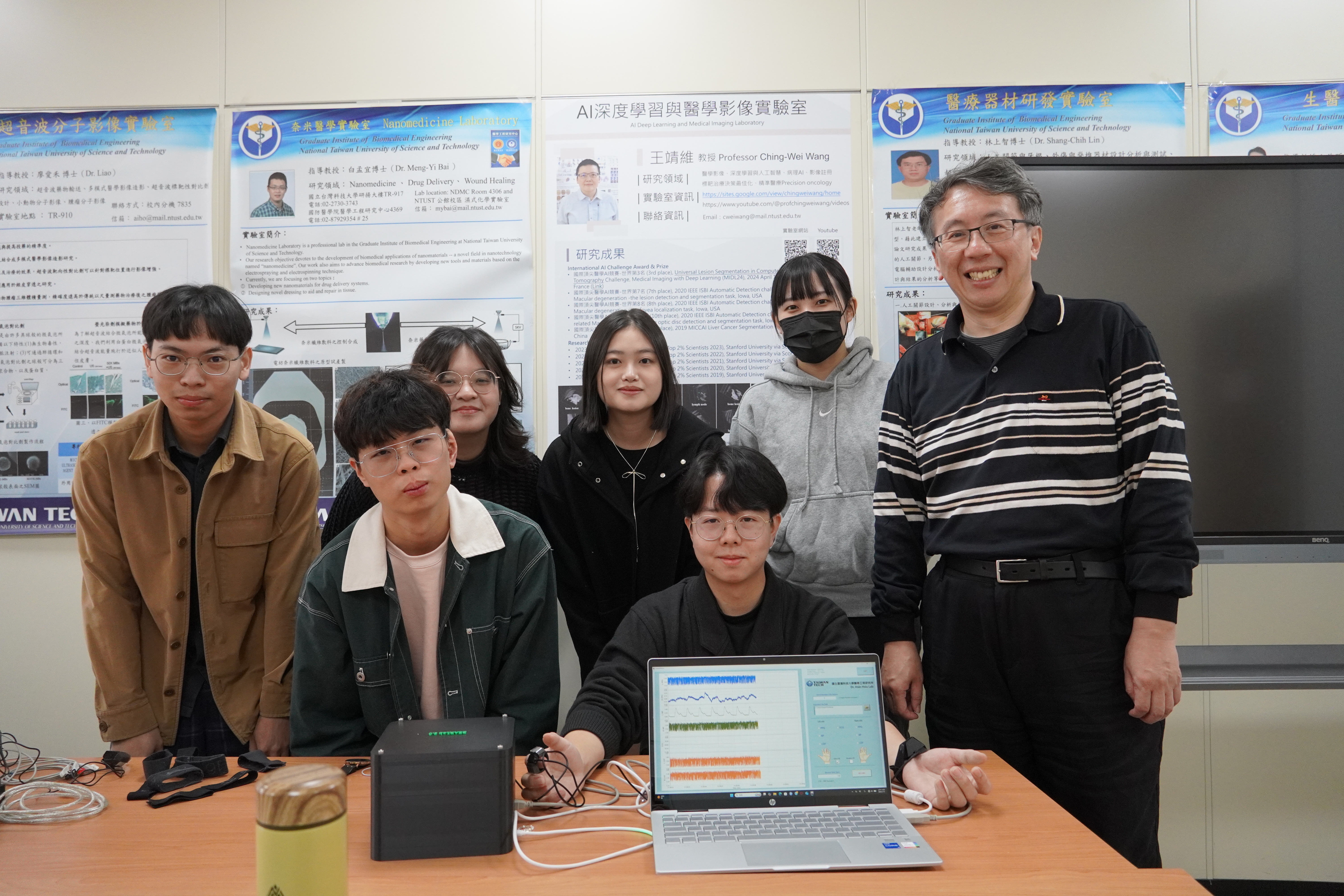
Professor Hsin Hsiu (first from right) of the Graduate Institute of Bioedical Engineering at Taiwan Tech took a group photo with the research team, whose members come from diverse disciplinary backgrounds including medical engineering, electronics, mechanical engineering, information science, and biotechnology.